Tuesday, 10 October 2017

WHAT IS PQQ—AND SHOULD YOU BE TAKING THE SUPPLEMENT?


While PQQ comes as a supplement, there’s a good chance you’re already getting some of it naturally: Found in different products—like kiwi, tofu, green peppers, papaya, and green tea—the compound, which helps your cells create energy, is said to help with your metabolism and mental focus, nutritionist Isabel Smith told Byrdie. It’s pretty much what makes many superfoods…super.
 
PQQ helps with your metabolism, energy levels, and mental focus.
 
Aside from helping take your energy levels from blah to #goals, one study found PQQ also acts as an antioxidant, helping to lower oxidative stress. Furthermore, other researchers discovered it can calm disease-causing inflammation. Basically, the tiny little compounds do some seriously impressive stuff.
If you want to reap the benefits, fill your plate with the already-healthy foods rich in PQQ. Prefer to take the supplement? Byrdie reports that plenty of options are available that can help give your body a boost. But, as always, it’s smart to consult an expert before adding it into your diet.
These supplements will (finally!) help you beat bloating. And these will get your nails into the healthiest shape ever.
s

Monday, 9 October 2017

Fitness tools help keep core strong at any age!


At 91, Elaine LaLanne is following in her husband's footsteps. She swims, lifts weights and even does push-ups to stay strong.

"A lot of people say they got a bad back -- well, work around your infirmities. Keep moving. Simple as that," said LaLanne.

It's a great way to look at life, and she isn't alone. Ultra marathoner Shannon Farar-Griefer shares the attitude.

"I'm 56 years old and I have MS so it's been really helpful with my balance as well and strengthening my muscles," said Farar-Greifer.

Farar-Griefer recently bought the Stealth. It's a core board of sorts that makes a game out of working your abs.

"Planks are so boring and so challenging so it's mental and physical torture together. Stealth is playing a fun game and you don't realize you're doing a plank," said fitness pro Eric the Trainer.

The beauty of the product is that it works your core, but more importantly, you get other body parts like your upper back, your shoulders and your arms. It's a game-changer.

Right now, there are three games to play while in plank position. You can use your body to guide the track ball to certain points on the screen, which takes muscle control and concentration. Your core gets a workout in about two minutes time.

"It's a great tool for posture. It's a great tool for strength. It's a great tool for older people to connect with their cores again," said Eric.

Eric was a consultant on creating this core tool that just came off a Kickstarter fund.

You can download the app for free, but currently the Stealth is $299, so your best bet may be to give it a test-drive a gym like Eric's.

http://abc7.com/health/fitness-tools-help-keep-core-strong-at-any-age/2483397/

Click Here For More Articles

Don't forget to opt-in to Our Healthy Living Society and get 3 free gifts while receiving the latest information on health, well-being and groundbreaking news about natural nutrition.

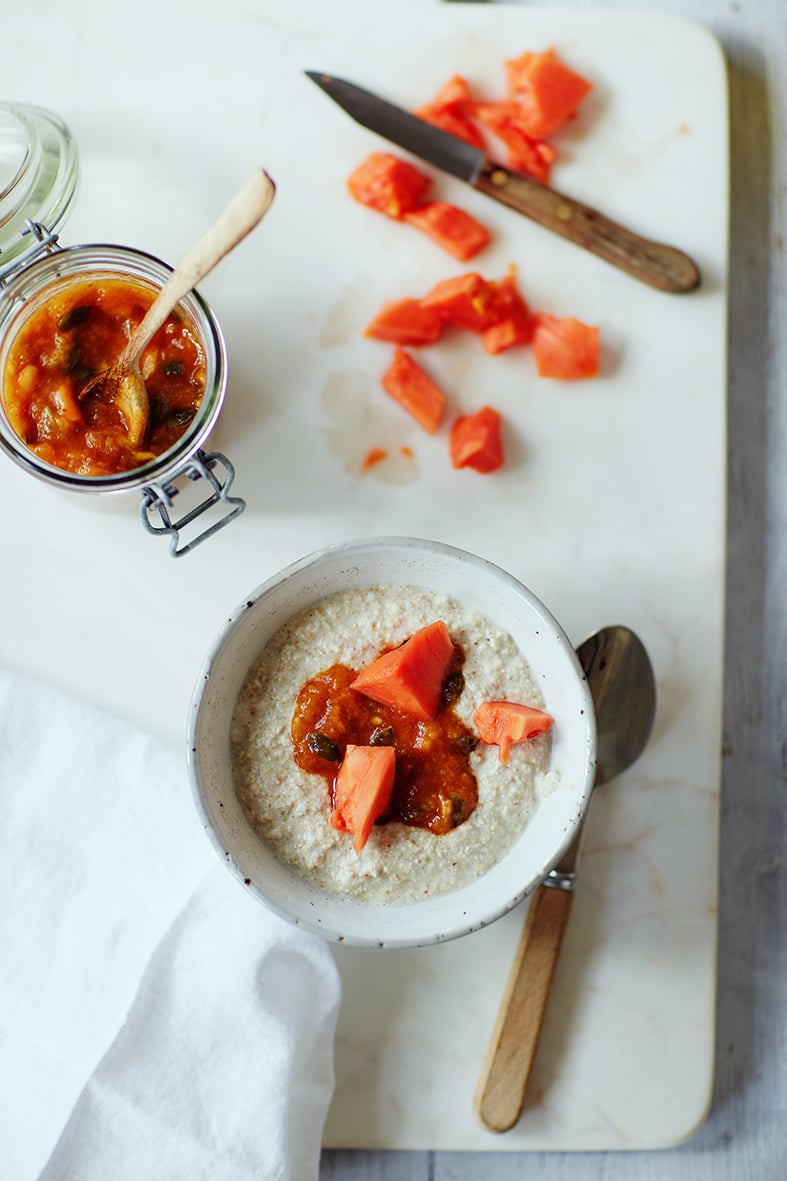
Breakfast Recipe That'll Brighten More Than Just Your Morning!


At this point, you've probably tried every delicious porridge recipe there is for breakfast. But there's a new kid on the block, and your breakfast menu simply isn't complete without it. This porridge recipe boasts immune-boosting powers of buckwheat and papaya, to give your mornings a wake-up call that's not only delicious but also healthy.


Buckwheat Porridge with 

Papaya Topping

INGREDIENTS

    Antioxidant Buckwheat Porridge Recipe
  1. For the porridge:
  • 170 grams buckwheat groats
  • 480ml water
  • 120ml almond milk
  • 1 teaspoon vanilla extract
  • 1 tablespoon lime juice
  1. For the papaya topping:
  • 1 large papaya
  • zest of 1 lime
  • 1/2 teaspoon ground cinnamon
  • 1/4 teaspoon ground ginger
  • 1/4 teaspoon ground nutmeg
  • 2 tablespoons raw honey
  • 2 tablespoons pumpkin seeds

DIRECTIONS

Porridge:
  1. Soak the buckwheat groats in the 480ml water for at least 1 hour or overnight. After soaking, strain, and rinse well.
  2. Put the soaked groats in a pot, add your almond milk and cook until soft. When cooked to your liking, add vanilla extract and lime juice and stir well.
Topping:
  1. Peel the papaya, then cut it into chunks and place in a large jar or container, add the remaining ingredients, and mash together (be sure to leave a few chunks in there) with a large spoon to release the juices and blend the flavours.
  2. Cover your jar or container with an airtight lid and place in the fridge to marinate overnight.
  3. Plate the groats in two bowls, top with your papaya relish and enjoy.


Click Here For More Articles

Don't forget to opt-in to Our Healthy Living Society and get 3 free gifts while receiving the latest information on health, well-being and groundbreaking news about natural nutrition.
Sunday, 8 October 2017

Persian Style Potato Pancakes [Vegan, Gluten-Free]

CALORIES

110

SERVES

9 pancakes

INGREDIENTS

  • 2 large russet potatoes (1 lb. total)
  • 8 ounces medium-firm tofu, drained and mashed
  • 1/4 cup chickpea flour (besan)
  • 2 cloves garlic, crushed
  • 2 teaspoons good-quality curry powder
  • 1 teaspoon salt
  • 1/2 teaspoon baking powder
  • freshly-ground black pepper to taste
  • 1/4 cup chopped Italian parsley
  • 1 tablespoon olive oil for frying


PREPARATION

  1. Peel the potatoes cut them in half.  Steam them until they are just barely done (still a bit firm).  (Alternatively, you can microwave-steam the potatoes in a covered Pyrex casserole for 4 to 5 minutes, or are just barely done but still a bit firm.)  Cool the potatoes in the freezer while you gather the other ingredients, mash the tofu, etc.
  2. Grate the cooled-down potatoes on a box grater into the mashed tofu in a medium bowl. Add the remaining ingredients and mix well. Divide into 9 equal portions and form into patties.
  3. Heat 1/2 tablespoon of the oil in a medium to large non-stick skillet over medium-high heat.  Cook half of the patties for about 3 minutes per side, or until they are golden brown on each side, handling gently.  Repeat with the other 1/2 tablespoon olive oil and the rest of the patties.  Serve hot.

NUTRItiONAL INFORMATION

3.0g total fat; 0.0mg cholesterol; 217.8mg sodium; 414.5mg potassium; 17.5g carbohydrates; 1.6g fiber; 0.9g sugar; 15.8g net carbs; 4.5g protein

NOTES

This recipe uses curry powder—not something you generally find in Persian cooking—which evidently is used in the potato pancakes made in the ancient city of Elam in southwestern Iran, according to the book Silk Road Cooking.
http://www.onegreenplanet.org/vegan-recipe/persian-style-potato-pancakes/

Click Here For More Articles

Don't forget to opt-in to Our Healthy Living Society and get 3 free gifts while receiving the latest information on health, well-being and groundbreaking news about natural nutrition.

7 surprisingly affordable superfoods!

Looking to stretch your food budget -- but eat a little healthier? Registered dietitian Lisa Grudzielanek with Your Tasty Life joins Real Milwaukee with seven surprisingly affordable superfoods.
For literal pennies, you can feed your family a food that rivals blueberries in its levels of disease-fighting antioxidants. A diet rich in fruits and vegetables may reduce the risk of cancers and other chronic diseases. How much? Between 2 1/2 to 6 1/2 cups of fruits and vegetables each day. This varies depending on the number of calories you need to consume for your weight and level of activity.
#1 Black Rice
Black rice bran contains more health-promoting antioxidants that are found in blueberries, but with less sugar and more fiber and vitamin E antioxidants.
#2 Sweet Potato
• What`s not to love about their shelf life? Sweet potatoes last about 3-5 weeks in the pantry and about 2-3 months in the fridge.
• Sweet potatoes are among the richest sources of beta-carotene, a nutrient your body converts to vitamin A after consumption.
#3 Apples
• Enjoy local apples & they`re in season right now!
• Eat the peel & it boosts antioxidant levels up to 6 times higher than the apples' flesh.
• The phytonutrients and antioxidants in apples may help reduce the risk of developing cancer, hypertension, diabetes, and heart disease.
#4 Beans
• Kidney, pinto, black, and navy beans stand out for being packed with fiber, folic acid, iron, potassium, and zinc.
• Zinc is required for a healthy immune system and proper action of many hormones.
• Bags of dried bean can be purchased for $1
• Pressure cooking is all the rage and can cut down cooking time drastically.
#5 Cranberries
• Beat out coffee, blueberries, and even red wine for most antioxidant-rich foods.
• Cranberries are a rock star superfood with a very good source of vitamin C, dietary fiber, and manganese, as well as a good source of vitamin E, vitamin K, copper and pantothenic acid.
#6 Coffee
• The combination of caffeine and antioxidants may be significantly reducing heart disease.
• There is considerable evidence that caffeine may protect against Alzheimer`s and Parkinson`s disease
• Do we need any more reasons?
#7 Green Tea
• Ranks high in antioxidants just behind coffee.
• Japanese researchers have also shown that women who drink 5 or more cups of green tea a day slash their risk of dying from heart disease by about 30%.
• Contain catechins, one of the most effective compounds for preventing sun damage.

Click Here For More Articles

Don't forget to opt-in to Our Healthy Living Society and get 3 free gifts while receiving the latest information on health, well-being and groundbreaking news about natural nutrition.

Cancer is pharmaceutical industry’s most profitable disease. Cure it? You must be joking.

Hi Tap, it was pointed out that some Toothpaste might still be available which don’t contain Fluorides. Those named were AloeDent Sensitive fluoride-free, Auromere Herbal Toothpaste, & Tom’s of Maine fluoride-free toothpaste. 
This might be so, but they also contain Sodium Lauryl Sulphate (Na-LS), ( ANIONIC SURFACTANT, & you probably use it EVERY DAY), like most others, here is a Search Engine  EWG. Cosmetics DataBase you can try it out to find out 

 How Safe Are Your Cosmetics?. Enter The Category Name, then Narrow it Down, with your Specific Request.

A long list of some bad actors
A long list of chemicals that you can’t pronounce is not in itself toxic – even if it looks it. But an analysis of these 3,163 chemicals in EWG’s Cosmetics Database shows that there is the reason for concern.
In fact, 1 in 20 earned a “high” hazard score (7-10 of 10), and a full 1 in 6 rated at least a “moderate” hazard score (3-10 of 10). 25 of them scored a 10, the highest score:
There is one I was very surprised they use viz STYRENE or Vinyl Benzene,  The Phthalates, & Hydroquinone I knew they used. The Names alone should tell you to Steer Clear
25 chemicals scored a “10” in Skin Deep
Aniline
BHA
Cyclohexanone
Dibutyl phthalate
Diethylhexyl phthalate
Hydroquinone
MIBK
Nano titanium dioxide
Nano zinc oxide (20-60nm)
Octoxynol-6
Octoxynol-7
Octoxynol-11
Octoxynol-12
Octoxynol-13
Octoxynol-16
Octoxynol-20
Octoxynol-25
Octoxynol-30
Octoxynol-33
Octoxynol-40
Octoxynol-70
PEG-3 Sorbitan oleate
PEG-6 Sorbitan oleate
Resorcinol
Styrene


If you want to Experiment, there is a lot of other Stuff you can Look Up with this ‘ENGINE’

Here are some you might recognise.

Acetone: Nose, throat, lung and eye irritant, headaches, confusion, increased pulse rate, effects on blood, nausea, vomiting, and unconsciousness, coma. Shortens the menstrual cycle in women. Effects of long-term exposure include kidney, liver and nerve damage, increased birth defects, metabolic changes, and coma. Found in nail polish remover.
Acetaldehyde: Found in many nail care products. Known to cause cancers in humans and experimental animals.

Aspartame: Genetically Modified, a synthetic sugar substitute. People report dizziness, headaches and even seizures. Scientists believe it can alter behavior due to altered brain function. Long-term effects of this genetically modified organism on human health have not been studied or tested. Found as a sweetener in foods and some body products, such as shaving gel. See our Genetically Modified / GMO Foods section for more information.

Benzene: Inhalation of high levels can cause headaches, rapid heart rate, tremors, confusion, unconsciousness and death. Hodgkin’s and Lymphomas result from inhalation. Used in detergents, drugs, pesticides and adhesives.

Benzoic / Benzyl / Benzene: Contains carcinogens, endocrine disruptor, may cause birth defects. Found in shower gels, shampoos, bubble bath.

Bisphenol A or BPA: a Toxic plastic chemical used as a can lining in brands of some infant formulas. Also found in water bottles, this chemical is used to produce polycarbonate and epoxy plastics. For babies, check food container labels and beware of polycarbonate plastic baby bottles. Chemical reactions can occur when plastic is heated.

Bisphenol A or BPA: a Toxic plastic chemical used as a can lining in brands of some infant formulas. Also found in water bottles, this chemical is used to produce polycarbonate and epoxy plastics. For babies, check food container labels and beware of polycarbonate plastic baby bottles. Chemical reactions can occur when plastic is heated.

Hydroquinone: A severely toxic and very powerful chemical. Banned in the United Kingdom, but still used in the U.S. Found in skin lightening products and hair dyes, this chemical alters the skins natural structure inhibiting the production of Melanin. Without natural protection, the skin is more susceptible to skin cancer. Prolonged use of Hydroquinone will thicken collagen fibers damaging the connective tissues. The result is rough blotchy skin leaving it with a spotty caviar appearance.

Monosodium Glutamate/MSG: MSG is an excitotoxin, which causes nerve damage and allergic reactions. Found in hundreds of foods, often under other names. See our Monosodium Glutamate / MSG section for more information


Soy: Contains several naturally occurring compounds that are toxic to humans and animals. Soy foods block calcium and can cause vitamin D deficiencies. One health agency estimates than 100 grams of soy protein provide the estrogenic equivalent of the pill. Processing and all modern soy foods contain MSG, which cause neurological problems. Soy products inhibit thyroid function, which may lead to fatigue and mental issues. Infants on soy formula are vulnerable to developing autoimmune thyroid disease when exposed to high amounts of isoflavones over time. These Isoflavones have been found to have serious health effects, including infertility, thyroid disease or liver disease,…..

SLS (Sodium Lauryl Sulphate): Builds up in heart, lungs, brain and liver from skin contact and may cause damage to these organs. Corrodes hair follicles and may cause hair to fall out. Damages immune system. Contain endocrine disruptors and estrogen mimics. Impairs proper structural formation of young eyes. May contain carcinogenic nitrosamines. This is a detergent derived from coconut oil and may be labeled natural or even organic. Found in toothpaste, soap, shampoo, body wash, bubble bath, facial cleansers.

Toluene: Poison to humans. Hallucinations, bone marrow changes, may cause liver and kidney damage and birth defects, endocrine disruptor and potential carcinogen linked to brain cancer. Irritates respiratory tract. Found in nail polish and cleaning products.

Triclosan: Found in a lot of antimicrobial soaps and toothpaste products, it can react with chlorine in the tap water to create Chloroform. This is a toxic chemical that can give you cancer. If you breathe enough chloroform, you will die. When you wash your hands with antibacterial soap that contains Triclosan, you are getting the fumes emitted from this chemical reaction.

Vinyl chloride: Used to create PVC (polyvinyl chloride) a known carcinogen. Often found in toys. Children chewing on toys can release toxins into their bodies. * see PVC

Zinc Stearate: Carcinogen. Found in blush and powder foundation

http://tapnewswire.com/2012/09/cancer-is-pharmaceutical-industrys-most/

Click Here For More Articles

Don't forget to opt-in to Our Healthy Living Society and get 3 free gifts while receiving the latest information on health, well-being and groundbreaking news about natural nutrition.

Friday, 6 October 2017

Pesto, salad dressing and cous cous: the unhealthiest 'healthy' foods in your kitchen cupboard

Madeleine Howell

Feeding children pesto pasta could be worse for their health than letting them eat McDonald's hamburgers, a salt action group has warned.

As reported today in The Telegraph, the amount of salt in shop-bought pesto is rising, with the average serving now containing 1.5g of salt, overtaking McDonald's hamburgers (1.2g).

Would-be healthy foods, it seems, are becoming decidedly unhealthy
The health dangers associated with a high salt intake are well documented: according to NHS choices, too much salt can raise your blood pressure (hypertension), which puts you at increased risk of health problems such as heart disease and strokes.

That said, balance is required. Although the majority of us eat more salt than we need, we all need a little bit of sodium because it helps to keep your body fluids at the right concentration, and is required for muscles and nerve activity.

The NHS currently recommends that adults refrain from consuming more than 6g of salt a day – and warns that on average we eat 8.1g a day.

For nutritionist Dr. Sarah Schenker, a member of the Association for Nutrition, it’s not enough to consider the salt content alone in food products. “It’s a mistake to look at one ingredient in isolation,” she explains. “It’s a shame that the salt has been added to the pesto, because potentially it could be very healthy. Olive oil, pine nuts and basil are great, thanks to the essential fatty acids they contain.”

Would-be healthy foods, it seems, are becoming decidedly unhealthy. As a result, it's crucial to wise up and check the label, and also to consider the appropriate portion size. Schenker warns strongly against the perils of fast food and processed foods, which she feels can contribute towards a culture of "mindless" eating.

“Often with processed foods, the problem is that you’re not in control of the ingredients,” she says. “That’s when you get the nasty surprises, and when something that appears healthy simply isn’t. It’s a real shame that the health benefits of certain products can be undermined. ”

13 “healthy” foods that might not be so healthy after all

1. Protein supplements

Nutritional therapist Antonia Magor advises protein shake fans to be wary. “Like most crazes what starts as a healthy idea gets convoluted and exaggerated. Protein is an important part of our diet, but we don’t necessarily need to be supplementing it with extra snacks and shakes consistently throughout the day. Protein shakes and snacks often contain high levels of sugar and salt, which negates the benefits of the protein.”

To get scientific about it, nutritionist Rhiannon Lambert, author of Re-Nourish: The Definitive Guide to Optimum Nutrition, tells us that part of the problem is an ingredient called sucralose: "Sucralose is an artificial sweetener made from sugar in a multi-step chemical process, where three hydrogen-oxygen groups are replaced with chlorine atoms," she explains. "Research suggests sucralose raises blood sugar levels, making us hungry when levels crash – and that contributes to weight gain."

2. Salad dressing

Often too much salad dressing (high in fat and salt) is added to otherwise healthy salads, undermining the nutritional benefits. Dr. Sarah Schenker recommends context when it comes to salad dressing, as well as stressing the importance of getting the amount right: “If it encourages you to eat a salad, it’s probably better than not having salad at all.”

3. Fat-free and low-fat foods

Most processed 'low fat' foods are a “ horrible hangover” from the days when we believed that low-fat diets were the answer to weight loss, says Harley Street nutritionist Kim Pearson. “The fact is when you remove fat from something it significantly reduces the taste, so manufacturers replace the fat with sugar, sweeteners or artificial flavourings, or a combination of them. Most of the time it's best to stick to the original full-fat version.”

 Yoghurt
Low-fat options are worse for you than their natural counterparts
CREDIT:  SUE WILSON/ALAMY STOCK PHOTO

Yoghurt is a prime example: according to Lambert, low-fat yogurts contain a "startling" amount of sugar: "Low-fat, sugar-sweetened yogurt contains too much sugar to qualify as a nutritious choice.  Many types of low-fat and non-fat yogurt are as high in sugar as desserts. Stick to Greek yogurt and add fruit for flavour."

4. Syrups

"Agave syrup, brown rice syrup, maple syrup, date syrup,” lists Pearson. “These are all widely promoted as natural sweeteners, and are used in products that claim to be 'refined sugar-free'. However, they are all sugars and should be viewed as such.

“Syrups like date and maple do contain some beneficial nutrients that are stripped away in the sugar refining process – but not enough to outweigh the downsides. Agave is highly processed and some argue that, because of it's high fructose content, it's even worse than standard table sugar.”

5. Fruit juice

It might claim to be 'one of your five a day' but one small (300ml) bottle of pure, squeezed orange juice contains the equivalent to six and a half teaspoons of sugar,” warns Pearson. “It's 'natural' sugar, but the body doesn't know the difference between sugar from fruit juice and sugar from a glass of Coke. Sugar is sugar.

"Also, beware of shop bought green juices. Many are marketed as green vegetable juices but actually have significantly more fruit (and therefore sugar) than you might imagine.”

Fruit juice
Sugar is sugar: cut back by limiting your fruit juice intake

CREDIT: BUREE LALITATHADA / EYEEM/ EYEEM

6. Cereal

“Most of us are aware that cereals such as Frosties are packed full of sugar, but there are a lot of breakfast cereals out there pretending to be healthy when they're actually not,” Pearson advises. “Watch out for granola and muesli – they're often significantly higher in sugar than you might imagine. The only way to know for sure, as always, is to read the label.”

Processed oat products are often not as good for you as homemade porridge either, adds Schenker, as they’re lower in fibre and have a higher glycaemic index. This means they lose the ability to release energy slowly and regulate blood sugar.

7. Wholewheat and multi-grain bread

“It might look healthy, but most shops bought brown sliced bread is processed,” says Pearson. “Read the label on your typical brown loaf and you'll see it's packed full of chemical additives – emulsifiers, mould inhibitors, preservatives and trans fats.

Brown bread
Sliced whole wheat and brown bread are processed too and can contain plenty of unhealthy surprises

CREDIT: TETRA IMAGES

“Steer well clear of any big brand sliced bread. Pay less attention to the front of food labels and focus your attention on the nutrition information and ingredients list at the back. It's the only way to be sure of what's really in your food.”

8. Rice cakes

“Rice cakes are a non-food. They’re a non-event,” affirms Schenker. “They don’t taste much of anything. You always need to put something on them, so it’s also important to consider what you’re choosing; it’s better to choose foods that add nutritional value and will keep you going, such as a warming vegetable soup.”

9. Couscous

“Couscous is just wheat in a different form. They can be confused with ancient grains such as bulgur wheat, barley and quinoa, but it’s not – it’s not a whole grain, it’s just a processed wheat product,” says Schenker. That doesn't necessarily make couscous unhealthy in itself, just beware that it's effectively a big bowl of carbohydrate, much like a bowl of white pasta.

Couscous is just another processed wheat product

CREDIT: ISABELLE ROZENBAUM & FREDERIC CIROU/ PHOTOALTO

10. Coconut oil

“The health benefits of coconut oil have been overplayed,” states Schenker. “It’s fine to use different oils and fats for different dishes, but coconut oil is high in saturated fats. It adds flavour to Thai dishes and has a good melting point, but it’s not great to substitute olive oil and rapeseed oil for coconut oil completely.”

11. Breakfast bars

“Sugar is always added to these because it’s what glues them together,” explains Dr. Sarah Schenker. “If you were to sit down to a bowl of oats with some fresh or dried fruit, that would be much better for you.” Her advice is to always make comparisons, and choose the one with the lowest sugar and salt content.

 Cereal bar
Breakfast bars and protein bars aren't necessarily a nutritional quick fix
CREDIT: GEOFF KIDD/SCIENCE PHOTO LIBRARY RF
12. Diet drinks

“These intensify your craving for more sweet stuff, and don’t do anything to combat sugar cravings – so you end up eating more unhealthy foods such as sweets and chocolate alongside your diet drink,” says Schenker.
Diet drinks simply intensify your cravings for sugar

CREDIT: JOSE LUIS PELAEZ INC/BLEND IMAGES

13. Gluten-free products

“These are often touted as being ‘healthier’ than their alternatives in cakes, cookies, and energy bars,” says Antonia Magor. “However, just removing the gluten from something does not make it healthier. Often the replacements are higher in sugar or sweeteners. To replicate the binding effect of gluten, alternatives are used which have little nutritional value or fibre – resulting in rapid blood sugar peaks and troughs.”

http://www.telegraph.co.uk/health-fitness/nutrition/pesto-salad-dressing-cous-cous-unhealthiest-healthy-foods-kitchen/

Click Here For More Articles

Don't forget to opt-in to Our Healthy Living Society and get 3 free gifts while receiving the latest information on health, well-being and groundbreaking news about natural nutrition.

Vegan transformed his body and GAINED three stone in muscle after giving up meat!

  • Fritz Horstmann, 20, was struggling to get the bulky physique he wanted
  • He adopted a vegan diet that helped him gain more than three stone in muscle
  • Now he has revealed how others can benefit by switching to a plant-based diet

A fitness fanatic has revealed how he transformed his body by going vegan.
Fritz Hortsmann, 20, from BerlinGermany, has always been confident in his body but was struggling to achieve the muscular physique he wanted.
But after switching to a plant-based diet, the gym-goer was able to gain three stone in muscle and completely change the way he looked. 
He is now sharing his story to help others who want to go vegan too. 

Transformation: Fritz Horstmann, 20, from Berlin, Germany, gained muscle after going vegan. Pictured, Fritz before
Fritz now
Transformation: Fritz Horstmann, 20, from Berlin, Germany, gained muscle after going vegan


Fit and toned: Fritz credits his vegan lifestyle for helping him bulk up at the gym

He said: 'I always get asked: "Don't you lack protein because you need meat to build muscle?"
'Most of them are surprised and people that know me or see me wouldn't associate me with being vegan, maybe it's because I'm tall, pretty big and have a good presence and people think vegans are limps.'

He said: 'I eat all kinds of plant foods ranging from quinoa to the occasional vegan faux meat and a lot more fruit and greens than before I went vegan.
'I know that I provide my body with the right nutrients, so it can thrive and I'm creating a much brighter future for me and for the environment.
'You know the feeling after eating greasy fries or a McDonalds Burger? I just don't want to feel that way after eating, my body basically glows from the inside with all the good, plant-based food.'
He explained that the basis of building muscle is the same for vegans and omnivors.
He added: 'My advice for people wanting to try veganism is to find knowledgeable people on the internet, read about all the benefits, inform yourself which supplements you need to use, go slow or cold turkey, totally depends on you.
'If you want to do it slowly, then cut out eggs and dairy first, meat at the end. You can either do vegan days, three to four days a week working your way up or replacing dinner everyday with a vegan option.'
Click Here For More Articles

Don't forget to opt-in to Our Healthy Living Society and get 3 free gifts while receiving the latest information on health, well-being and groundbreaking news about natural nutrition.

Thursday, 5 October 2017

Eating raw garlic cloves with honey can help you lose weight!

New Delhi: You would be amazed to learn that consuming raw garlic cloves with honey on an empty stomach is good for your health. Honey and garlic may sound like an odd combination, but they can really work well together and result in impressive health outcomes.
Surprisingly, researchers have concluded that both garlic and honey have a vast impact on weight loss as well.

Some amazing health benefits of garlic

Garlic has been used as a food and remedy for several health problems, since ancient times. This great bulb is one of the world’s healthiest foods, offering a wide range of health benefits owing to its powerful antioxidant properties. 
In fact, garlic is more than a spice or herb used in cooking to enhance the flavor of your recipes. Allicin, the active component of garlic, has been credited with a number of healing properties. It is also responsible for the pungent smell of garlic. Take a look at some of the amazing health benefits of garlic -
  • Lowers blood pressure and cholesterol levels
  • Fights colds and flu
  • Improves digestion
  • Boosts immune system
  • Eliminates toxins and improves liver health
  • Helps treat many cardiovascular and metabolic diseases, including atherosclerosis, hyperlipidemia, thrombosis, and diabetes
Researchers believe garlic has anti-cancer, anti-fungal and anti-microbial properties. It is also a powerful antioxidant that regenerates your cells, giving you a smooth, soft and acne-free skin.

Health benefits of honey

Likewise, honey isn’t just a delicious food, but it is packed with antioxidants, vitamins and minerals, which are all extremely beneficial to your health. Honey is well-known for its fat-burning properties and that’s how it enjoys huge popularity among dieters. It can be used as a natural sweetener, substituting sugar in foods and drinks. 
Research has shown that drinking warm water with honey helps in digesting the fat stored in the body, which in turn aids in weight loss.
Honey is also often used as a natural antiseptic in traditional medicines due to its antibacterial and anti-fungal properties.

The honey and garlic formula to weight-loss:

So, if you want to get optimal health benefits of these superfoods - garlic and honey - you need to eat them the right way. Here’s a great way of eating garlic and honey to boost your immune system, keep your body fit and strong:
Ingredients
  • Few cloves (2 to 3) of garlic – you can chop the garlic cloves or even crush them
  • 1 tablespoon of raw organic honey
Combine them and enjoy the mixture daily on an empty stomach to strengthen your immune system, lose weight, and keep your body strong and healthy.
To get the most health benefits from garlic and honey, you can even store them in a closed jar either in the fridge or at room temperature.

Click Here For More Articles

Don't forget to opt-in to Our Healthy Living Society and get 3 free gifts while receiving the latest information on health, well-being and groundbreaking news about natural nutrition.