The seasonal flu shot doesn't work very well—it reduces the risk of flu by just 40 per cent at best—and it works even less well if you're eating fast, processed foods.
Additives in the foods, and especially tBHQ (tert-butylhydroquinone), hamper the immune response so it can't fight the cells that have been infected. As the immune system is supposed to work hand-in-glove with the vaccine, the additives make the vaccine itself less effective.
The additives are commonly found in processed and fast foods, such as chips and crackers, and in frozen foods. There's no legal requirement for manufacturers to list tBHQs on the packaging so there's no way of knowing for sure if the food contains them.
Researchers from Michigan State University tested two flu strains, H1N1 and H3N2, on laboratory mice, some of whom were also fed TBHQ, and then monitored their immune responses.
The additive affected the immune system's T cells, which are mainly responsible for fighting infections. It slowed the activation of T cells and reduced their ability to fight infections sooner. It also affected the immune system's ability to 'remember' how to respond to the virus, especially when a new strain was introduced later.
References
(Source: Michigan State University, April 7, 2019)
Don't forget to opt-in to Our Healthy Living Society and get 3 free gifts while receiving the latest information on health, well-being and groundbreaking news about natural nutrition.
Don't forget to opt-in to Our Healthy Living Society and get 3 free gifts while receiving the latest information on health, well-being and groundbreaking news about natural nutrition.
Don't forget to opt-in to Our Healthy Living Society and get 3 free gifts while receiving the latest information on health, well-being and groundbreaking news about natural nutrition.
Don't forget to opt-in to Our Healthy Living Society and get 3 free gifts while receiving the latest information on health, well-being and groundbreaking news about natural nutrition.
Don't forget to opt-in to Our Healthy Living Society and get 3 free gifts while receiving the latest information on health, well-being and groundbreaking news about natural nutrition.
Hydrogen sulphide is behind the smell of rotten eggs
The gas best known for being used in many stink bombs may also control blood pressure, say US researchers.
Small amounts of hydrogen sulphide - a toxic gas generated by bacteria living in the human gut - are responsible for the foul odour of flatulence.
But it seems the gas is also produced by an enzyme in blood vessels where it relaxes them and lowers blood pressure.
The findings in mice may lead to new treatments for high blood pressure, the Science journal reported.
Researchers at Johns Hopkins University, in Maryland, found that the gas is produced in the cells lining blood vessels by an enzyme called CSE.
We know hydrogen sulphide is not good for us at high levels but it seems that at the lower levels in the body it is essential
Professor Amrita Ahluwalia
In mice engineered to be deficient in this enzyme, levels of hydrogen sulphide were almost depleted compared with levels in normal mice.
The CSE-deficient mice also had blood pressure measurements about 20% higher than the normal mice, comparable to serious hypertension in humans.
When the engineered mice were given a drug which relaxes normal blood vessels - methacholine - there was no difference, indicating the gas is responsible for the relaxation.
Treatments
Another gas, nitric oxide, is already known to be involved in the control of blood pressure.
Researcher Dr Solomon Snyder said: "Now we know hydrogen sulphide's role in regulating blood pressure, it may be possible to design drug therapies that enhance its formation as an alternative to the current methods of treatment for hypertension."
Professor Amrita Ahluwalia, an expert in vascular pharmacology at Barts and The London Medical School, said: "This study shows that smelly hydrogen sulphide is also likely to have a role in regulating blood pressure and it will be a bit of an impetus for scientists to develop more specific tools to work out what's going on.
"We know hydrogen sulphide is not good for us at high levels but it seems that at the lower levels in the body it is essential."
Dr Allan MacDonald, a reader in pharmacology at Glasgow Caledonian University, said: "Treatments based on hydrogen sulphide could become important in a variety of cardiovascular diseases," he said.
Don't forget to opt-in to Our Healthy Living Society and get 3 free gifts while receiving the latest information on health, well-being and groundbreaking news about natural nutrition.
Don't forget to opt-in to Our Healthy Living Society and get 3 free gifts while receiving the latest information on health, well-being and groundbreaking news about natural nutrition.
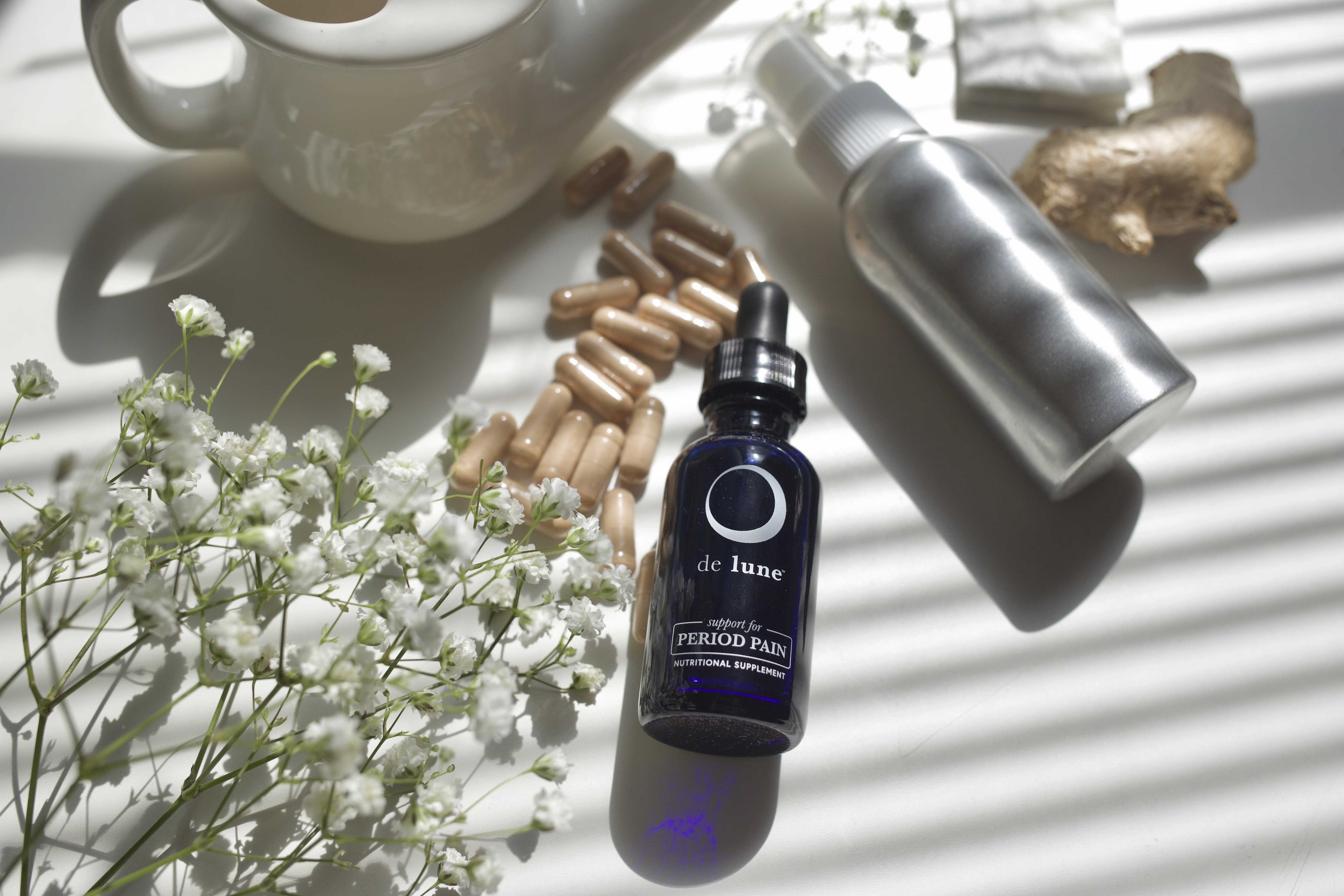
De Lune is a natural remedy for period pain. (Staff Photo by Katie Peurrung)
After falling sick during her first year at NYU, Sophie Gossack eliminated processed foods, dairy, gluten and artificial sugars from her diet.
“My diet comprises pretty much entirely of anti-inflammatory and vitamin-rich foods,” Tandon senior Gossack said. “I eat primarily plant-based and try to incorporate as many colors in my diet as I can – that’s when I’m getting the most nutrients.”
Some students said they are altering their diets and relying on essential oils to supplement healthy living. While itself not a direct cure for illness, an anti-inflammatory diet can aid in a healthy lifestyle. Foods that fight inflammation include whole foods, such as colorful fruits and vegetables, whole grains, plant-based proteins and fresh herbs and spices, according to a 2018 article from Harvard Medical School.
“Ginger, green tea and berries are my favorite,” said Gallatin sophomore Christina Gayton, who believes eating antioxidant-rich foods boosts her overall well-being.
Antioxidants are molecules that help fight oxidative stress caused by free radicals, or chemicals that damage your cells and their genetic material, according to a Harvard School of Public Health report. Free radicals are released when you consume highly processed foods or toxins and are exposed to sunlight or pollution. Examples of antioxidant-rich foods include berries and dark, leafy vegetables.
Gallatin sophomore Mikaila Roncevich has been eating a whole food, plant-based diet for over three years. The physical benefits are immense — increased energy, better sleep and better muscle growth.
“I notice an enormous difference in how I feel,” Roncevich said. “Eating foods with excess sugar and sodium feels like having a hangover.”
However, CAS sophomore Maren Altman claims the largest benefit she has received from her new diet lies in her mental state. Diet can’t cure depression and anxiety, but it can help alleviate symptoms, according to a 2018 Atlantic article.
“The high frequency carried in these plant foods is much more conducive to emotional and spiritual health than the density of animal products,” Altman said. “My grounding, whole foods diet has facilitated my journey of healing on a much deeper level than the physical.”
Furthermore, Altman incorporates essential oils, which she says enhance her mental health. To get around NYU’s restriction on burning candles or incense in dorms, she acquired an oil diffuser and turned to essential oils.
Essential oils are aromatic compounds extracted from plants, and they contain a plant’s essence, or its scent and flavor. These are used in aromatherapy, a form of alternative medicine. While some oils have proven benefits, the risks are not fully evaluated, according to a 2018 Time article which draws on a National Institute of Health study.
“Using specific scents, either diffused or straight on the skin, can bring powerful shifts,” Altman said. “I often diffuse peppermint essential oil in the morning to wake me up a bit and rub a few drops of lavender oil on my neck and on the soles of my feet to calm me before bed.”
Tandon sophomore Rhea Patteri said essential oils relieve her anxiety.
“Essential oils have the ability to work with depression, panic attacks, stress, insomnia and anxiety,” Patteri said. “The fact that they are a natural alternative is only more appealing.”
Remember to use all medication safely and always follow the advice of healthcare professionals.
Don't forget to opt-in to Our Healthy Living Society and get 3 free gifts while receiving the latest information on health, well-being and groundbreaking news about natural nutrition.
Don't forget to opt-in to Our Healthy Living Society and get 3 free gifts while receiving the latest information on health, well-being and groundbreaking news about natural nutrition.
Don't forget to opt-in to Our Healthy Living Society and get 3 free gifts while receiving the latest information on health, well-being and groundbreaking news about natural nutrition.
Don't forget to opt-in to Our Healthy Living Society and get 3 free gifts while receiving the latest information on health, well-being and groundbreaking news about natural nutrition.
Don't forget to opt-in to Our Healthy Living Society and get 3 free gifts while receiving the latest information on health, well-being and groundbreaking news about natural nutrition.
Don't forget to opt-in to Our Healthy Living Society and get 3 free gifts while receiving the latest information on health, well-being and groundbreaking news about natural nutrition.
People who regularly take a sleeping pill are more likely to develop high blood pressure—and that means they are also in line to take another pharmaceutical, the antihypertensive drug.
So do sleeping pills cause high blood pressure (hypertension), or is it all part of an unhealthy lifestyle pattern where poor sleep and high blood pressure go together?
Nobody is sure, but researchers suspect sleeping pills could be playing a significant part because people already taking an antihypertensive are more likely to increase the dose, or take a second drug if they are also taking a pill for their insomnia.
Researchers from the University Autonoma of Madrid looked at the sleeping habits and medications of 752 people who were aged 60 and older. Nearly 40 per cent slept poorly, and around 17 per cent regularly took a sleeping pill—and during the lifetime of the study, 156 of the participants increased the number of antihypertensives they were taking.
From that, the researchers estimate that people taking a sleeping pill were 85 per cent more likely to increase the dose of their antihypertensive medication.
Don't forget to opt-in to Our Healthy Living Society and get 3 free gifts while receiving the latest information on health, well-being and groundbreaking news about natural nutrition.
An energizing green smoothie packed with vitamins and minerals is the perfect way to get your greens.
This recipe is my go-to green drink—it's nice and sweet thanks to the apple, pineapple and mandarins, yet still has plenty of green goodness from the cucumber, parsley, mint and lime.
I recommend adding a generous handful of parsley too, even if you're not a huge fan of the herb. Apart from having a lovely fresh flavour, parsley is also an excellent source of vitamins K and C, and a good source of vitamin A, folate and iron. Plus it contains a compound called apigenin, which has shown promise as an anticancer agent in preclinical studies and in mice grafted with human tumours.1
Another star ingredient in this raw recipe is the mandarin oranges, also rich in antioxidant vitamin C. A couple of Japanese studies have suggested that eating mandarin oranges (or drinking their juice) could cut your risk of developing liver cancer as well as other serious diseases, including atherosclerosis (hardening of the arteries) and insulin resistance (linked to diabetes).2
This smoothie is best consumed immediately but will keep in the fridge for up to 48 hours if stored in an airtight container.
Clean Green Smoothie
Makes 2 glasses
Ingredients
1 cucumber, whole (peeled if not organic)
Handful parsley, fresh
Handful mint, fresh
3 Mandarin oranges, peeled
1-inch pineapple, fresh, peeled
1 apple
½-inch ginger root, fresh
½ lime, peeled
1 tsp chia seeds
1 cup pure (filtered) water
Directions
Blend all ingredients together in a high-speed blender until smooth.
Drink immediately, or refrigerate first if preferred.
--
Markéta Bola is a natural nutritionist and raw living-food chef who leads raw-food workshops, classes, dining experiences and Tree of Life Wellbeing & Vitality Festivals in the Midlands
Don't forget to opt-in to Our Healthy Living Society and get 3 free gifts while receiving the latest information on health, well-being and groundbreaking news about natural nutrition.
A traditional Indian herb could be an effective alternative to antibiotics—and now scientists are about to find out in the first-ever trial of its type in the West.
The herb, Andrographis, is being tested as a natural remedy against colds and flu—and treating common problems like these with antibiotics is bringing closer the era of the drug-resistant superbugs.
Andrographis, known as 'king of the bitters', grows in India and Sri Lanka—and was thought to be responsible for combatting the Spanish flu epidemic that had reached the sub-continent by 1919.
Researchers from the University of Southampton have recruited 20 surgeries to participate in the trial, which will be using Andrographis supplements supplied by Pukka Herbs, the tea and herbals company.
It's a placebo-controlled study—which means patients could be given the real herb or a dummy version—that will look at the herb's abilities to help treat acute coughs, sore throats and sinusitis.
The results should be announced by the summer and could form the platform for a larger study involving more patients with an acute respiratory infection.
Don't forget to opt-in to Our Healthy Living Society and get 3 free gifts while receiving the latest information on health, well-being and groundbreaking news about natural nutrition.
Don't forget to opt-in to Our Healthy Living Society and get 3 free gifts while receiving the latest information on health, well-being and groundbreaking news about natural nutrition.
The importance of high-dose vitamin C has been underlined yet again. Not only can it reverse cancer and heart disease, but it will also help get you out of the hospital sooner, even if you're in critical care.
Taking between 2 and 4 grams of the vitamin every day can shorten a hospital stay by up to 9 per cent. It doesn't sound much, but these patients were in intensive care units (ICUs), and it was touch-and-go whether they would leave at all.
The vitamin should be part of the daily care regime at every ICU, say researchers from the University of Helsinki, who took another look at 12 trials that had tracked the progress of 1,766 ICU patients.
Although just 0.1 grams is enough to maintain healthy plasma level of vitamin C in healthy people, the researchers say, typical ICU patients need around 4 grams a day because their levels are dangerously low.
In six trials, patients who were given an average of 2 G of vitamin C orally—not the most efficient way of delivering the vitamin which, ideally, should be administered intravenously—were out of the ICU around 9 per cent sooner.
It's perhaps not surprising. The vitamin influences hundreds of our genes and plays an essential role in the healthy functioning of our immune system. Previous studies have shown how it can reverse cancer, lower blood pressure, decrease atrial fibrillation (irregular heartbeat), and reduce glucose levels in diabetes 2 sufferers.
Don't forget to opt-in to Our Healthy Living Society and get 3 free gifts while receiving the latest information on health, well-being and groundbreaking news about natural nutrition.
Don't forget to opt-in to Our Healthy Living Society and get 3 free gifts while receiving the latest information on health, well-being and groundbreaking news about natural nutrition.
Don't forget to opt-in to Our Healthy Living Society and get 3 free gifts while receiving the latest information on health, well-being and groundbreaking news about natural nutrition.



 We know hydrogen sulphide is not good for us at high levels but it seems that at the lower levels in the body it is essential



 Markéta Bola is a natural nutritionist and raw living-food chef who leads raw-food workshops, classes, dining experiences and


