Wednesday, 3 January 2018

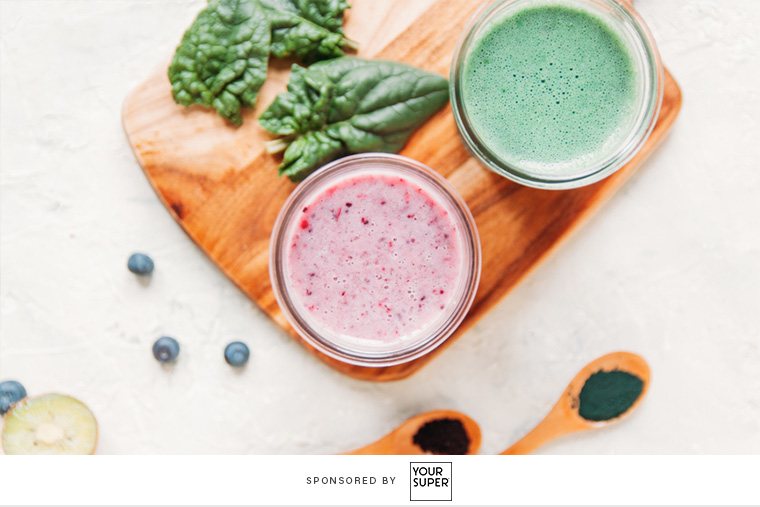
3 EASY SUPERFOOD RECIPES!

 PIN IT
It’s time to get serious about your goals (after the champagne, that is). Whether you’re looking to upgrade your beauty game, fine tune your fitness situation, or just generally kill it at life, though, where exactly do you start? 
Take a deep breath. Incorporating a personal mantra, adding a morning meditation, or tweaking your diet are all small and totally achievable steps that can make a huge difference. And you can accomplish that last one with a seriously easy (and majorly impactful) secret weapon: Your Super.
The organic, plant-based powder mixes don’t contain any sweeteners or artificial ingredients—and they’re loaded with nutrients to tackle your specific needs, like upping energy, boosting immunity, and even improving your complexion (which just so happen to line up with your #goals).
The co-founders of Your Super experienced how powerful healthy foods actually are (especially after one battled cancer at age 24), and made it their mission to make high-quality ingredients accessible. And trust, it’s easy: All you need to do is add one scoop to your water, smoothie, or even favorite baked goods recipe, and your morning is instantly supercharged. 

Keep reading for four easy morning superfood recipes to help you stay focused on your specific resolutions in ‘18.

GET STARTED
2/5
PIN IT
Photo: Your Super

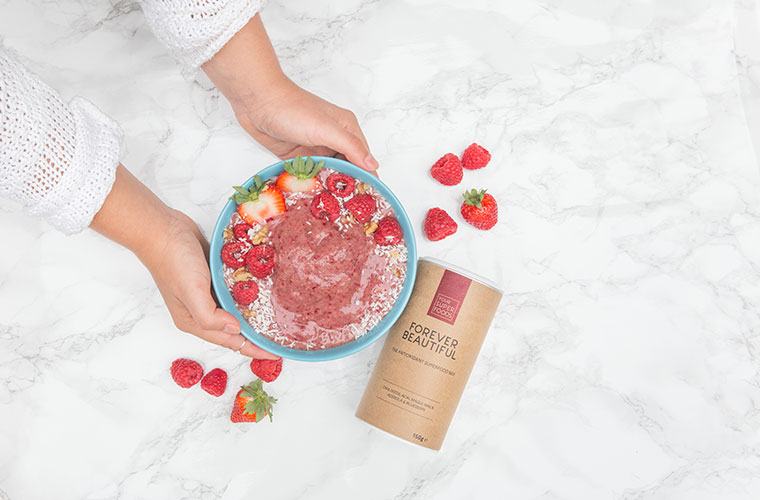
Forever Beautiful Breakfast Bowl

If 2018 is going to be the year you finally focus on self care, the Forever Beautiful mix promises to give your hair, skin, and nails a boost thanks to its combination antioxidants and vitamin A, C, and E that are said to help fight free radicals and repair cell damage. Considering it your healing beauty cocktail.
Ingredients:
1 Tsp Forever Beautiful Mix1/3  cup coconut milk1½  frozen bananas
Handful of strawberriesBerries for topping
Directions:1. Place all ingredients in a blender and blend until smooth.
2. Pour mixture into a bowl, top with whatever you’d like, and enjoy!
3/5
PIN IT
Photo: Your Super

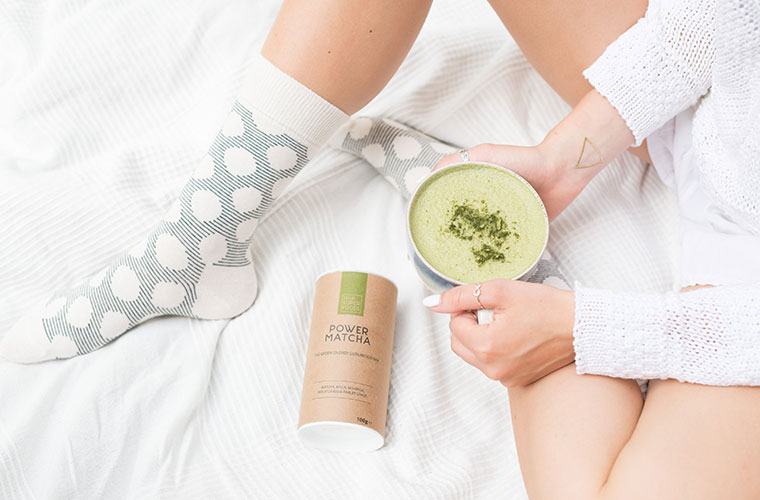
Power Matcha Latte 

Between meetings, Slack messages, and your smartphone, getting distracted feels unavoidable. One way to help boost your focus? Matcha. This mix features natural caffeine for an energy kick (AKA it could help you stay more on top of your game in the morning or during the 3 p.m. slump).
Ingredients:1 Tbsp Power Matcha Mix1-2 Tbsp hot water1 cup almond milk1 Tbsp organic coconut sugar
Directions:1. Stir the Power Matcha Mix in hot water until all clumps are gone.
2. Add the almond milk and coconut sugar to a small pan and heat.
3. If you have one, use a frother to make the milk extra foamy (but don’t worry, it will be creamy either way).
4. Pour everything into your favorite mug and start sipping.
4/5
PIN IT
Photo: Your Super

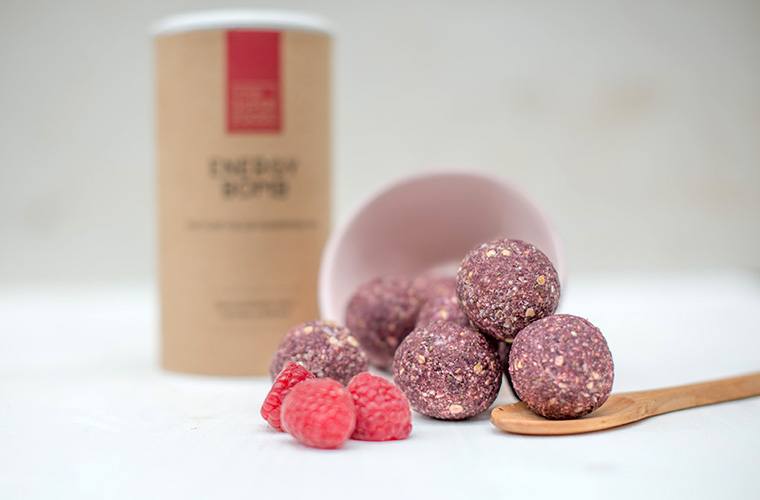
Pre-Workout Morning Energy Balls

If your goal is to skip the snooze button each morning, these energy balls will help you wake up and actually make it to barre class before work. The Energy Bomb mix features natural caffeine and a combo of antioxidants, phytonutrients, and amino acids designed to give you some pep for up to eight hours. Repeat this mantra: “I will be a morning person in 2018!”
Ingredients:1 Tbsp Energy Bomb Mix
1 cup pitted dates1/2 cup oatmeal1/2 cup almonds
Directions:
1. Blend all ingredients in a food processor until sticky and roll into balls.
2. Chill in the fridge, and snack away.

Click Here For More Articles

Don't forget to opt-in to Our Healthy Living Society and get 3 free gifts while receiving the latest information on health, well-being and groundbreaking news about natural nutrition.

Here’s how to keep your New Year’s fitness resolution — without injury!

If you’re thinking about getting healthy or fit in 2018, you aren’t alone. Fitness was the most popular New Year’s resolution last year, according to iQuanti, and is among the top goals for Americans each year. Yet the adrenaline and determination to start 2018 off right can have an unexpected side effect: injury.

With enthusiasm for a new resolution, it’s common to start January by running miles every day, jumping into a daily boot camp class or attacking a muscle group you aren’t used to exercising. Regardless of your overall fitness level, this can quickly lead to injuries that may take months to heal, including tendinitis, muscle strains and stress fractures. Unfortunately, injuries due to exercise or exercise equipment are among the most common injuries seen in the ER, according to the U.S. Consumer Product Safety Commission.
Our offices fill up in mid-January with workout-related injuries, often to the knee, shoulder or hip as a result of exercising too hard or neglecting to cross-train. As you plan your goals for 2018, take some time to consider how to accomplish them safely. Some tips to keep you in the gym and out of the doctor’s office:
  • Start simple. Learn the basics of warming up and stretching before you work out to avoid strains and sprains. You may want to sign up for an online warm-up program before you head to the gym. If you plan to take a new class, let the instructor know if you haven’t done that type of workout before or haven’t been exercising regularly so they ease into the exercises.
  • Choose a lower-impact activity, such as an elliptical machine, bicycle or water exercise, if you haven’t been exercising regularly.
  • Plan to work out just three days a week. You should take several months to ramp up to more frequent exercise, longer aerobic activities or more impactful workouts such as running and weight training.
  • Remember: Pain may not be gain. Whether you’re just starting a workout routine or branching out into a new style of exercise, you don’t want to be in pain early on. If you listen to your body and rest when you are in pain, you could prevent a more serious injury. You need to build up muscle endurance and strength before the soreness will be a healthy measure of building muscle.
  • Poor form quickly causes injury. Improper technique can be a result of training on your own — learning a new exercise from workout videos, for example — or pushing your muscles past the point of fatigue and forcing other muscles to compensate. Unfortunately, this often causes an injury. We recommend carefully listening to your body and stopping an exercise when you notice your form deteriorating. If you are learning a new exercise — from yoga to weight training to an elliptical machine — the safest plan is to go to a class or use a trainer at first to ensure proper technique.
Research shows that a full 80 percent of those who buy gym memberships to support a fitness resolution will drop their memberships within five months — and nearly 20 percent are gone by February. Don’t let an early injury sideline your workout routines and fitness goals this year. By listening to your body and easing into an exercise plan, you can build strength safely and meet your 2018 resolutions.
Dr. Scott Faucett and Dr. M. Brian Polsky practice throughout Maryland and Washington, D.C. with The Centers for Advanced Orthopaedics, the largest private orthopedic provider in the country.


Click Here For More Articles

Don't forget to opt-in to Our Healthy Living Society and get 3 free gifts while receiving the latest information on health, well-being and groundbreaking news about natural nutrition.

Tuesday, 2 January 2018

5 Ways to Remain Emotionally Healthy While Chasing Success!

Hint: Your value system plays a major role.

I’ve been on the road and building my business significantly this year, and if I’m being honest, it’s been exhausting. Thankfully, I have a plan in place to keep me grounded and healthy, and ensure my wheels don’t fall off as I pursue “the dream” of entrepreneurialism and business development.
When it comes to success, whether it’s work or personal, it’s easy to get lost in too much. We travel, spend hours on video chat and calls, make plans and deals, and generally do way more than we should. Over the years of working with high-level performers, as well as learning to navigate my own boundaries, I’ve picked up a few critical rules for never falling into the achiever’s abyss. Here are some big ones:

Never Prioritize Money over Family

In the last twelve months, I have advised a half dozen consultants who each had the “best year of my [their] career.” I listened to each of their stories and saw the theme instantly – they all divorced by sacrificing their families on the altar of more money. It doesn’t take a divorce to be successful, but it certainly can mean that’s what will happen when you aren’t mindful of your priorities.
The moment we prioritize money over family, we lose our footing. Family roots us to something sustainable, but money is naturally transient. This is because family fosters intimacy and growth, and this is how we are forged as people. If you want to ensure you remain emotionally healthy as you reach for the stars, prioritize the people in your life who are helping you get there, and that is most likely your family.

Stay Connected to Real Life

It breaks my heart when I see people who live like kings and queens on the road, eating at the best restaurants and staying at the best hotels, but they come home to the marginal, barely scraping by. The disparity begs for travel, which creates distance between real life and the glamour of the road. Before they know it, these weary-eyed travelers are prisoners to the trappings of an expense account and no longer connected to reality.
An easy, but powerful tool for preserving a connection to real life on a systematic basis? Deny yourself something basic each day. For me, it might be ordering water instead of iced tea, or foregoing an appetizer or salad at dinner. For you, it might be saying no to a steak or yes to a salad. Whatever it is, when we deny ourselves something trivial, we remind our brain that it can’t have whatever it wants. This creates a miniature war inside, keeping us tethered to the reality that life is not all about satiation. And that is what reality is all about, and reality keeps us healthy.

Remain Physical

A few years ago, I ruptured my Achilles tendon playing basketball. My surgeon told me I was the typical “weekend warrior” – a 40’s male who sat at a desk most of the week, was overactive during the weekend, and suffered an injury because of the inconsistent lifestyle. As I recovered, I decided that I wanted to incorporate regular physical activity into my work. I wasn’t sure exactly how I would do it, but I knew it was necessary. It started with being consistent with exercise in general, then I realized I could motivate others with my own commitment to exercise (part of my work as a consultant involves motivation). Soon, it simply became a part of my lifestyle.
There are literally mountains of research demonstrating the connection between physical health and emotional health. Rather than argue the case, I simply recommend you weave physical activity into your lifestyle. Walk to meetings. Take the stairs. Post selfies working out. Own the process. When you stay physically healthy, your emotional health follows suit.

Make Good Friends

My wife is my best friend, and has been for almost three decades. I also have two men in my life who are like brothers to me, and they are also my best friends. I do life with them. These three friends have walked through the good, the bad, and the ugly with me. I’ve had plenty of other friends in life, and most have come and gone. When you have a good friend, you can depend on them. They are loyal. They support you, encourage you, challenge you, and fire you up. You do the same for them. The best thing about the three I’ve chosen is that I can look up to them and know that my standards won’t ever be lowered by being in relationship with them.
But a bad friend (yes, I've had more than a few)? They undermine you. They make you feel low, they devalue you, they use you, take from you, never truly give to you, and they limit you. Worse yet, they keep you from being the best version of yourself. Without a doubt, I would rather have one good friend than 1,000 bad friends. 
Jim Rohn said you are the average of the five closest people to you. Take a look around and assess your circle. Are these the people you want to become? Your health literally depends on your decision, so choose wisely. 

Enjoy The Simple Things

There’s something about this particular time in history that feels depressing and serious all the time. Politics, war, crime, the economy- whatever it is, it just feels bad. One of the ways you can reconnect with your emotional health is to simply enjoy the moment. My challenge for you today is to simply look out your window and reconnect with the beauty of the world around you. I’m writing this on a flight to Sacramento right now and it’s gorgeous outside. What can you do to step outside of your routine or your stresses and see something beautiful? Stop what you’re doing and take a look right now.
HEALTH AND WELLNESS


Click Here For More Articles

Don't forget to opt-in to Our Healthy Living Society and get 3 free gifts while receiving the latest information on health, well-being and groundbreaking news about natural nutrition.

Lessons on Aging Well, From a 105-Year-Old Cyclist!

Robert Marchand, age 105, in Paris on Jan. 5, 2017, a day after setting a new one-hour cycling record.CreditJoel Saget/Agence France-Presse — Getty Images
At the age of 105, the French amateur cyclist and world-record holder Robert Marchand is more aerobically fit than most 50-year-olds — and appears to be getting even fitter as he ages, according to a revelatory new study of his physiology.
The study, which appeared in December in The Journal of Applied Physiology, may help to rewrite scientific expectations of how our bodies age and what is possible for any of us athletically, no matter how old we are.
Many people first heard of Mr. Marchand last month, when he set a world record in one-hour cycling, an event in which someone rides as many miles as possible on an indoor track in 60 minutes.
Mr. Marchand pedaled more than 14 miles, setting a global benchmark for cyclists age 105 and older. That classification had to be created specifically to accommodate him. No one his age previously had attempted the record.
Mr. Marchand, who was born in 1911, already owned the one-hour record for riders age 100 and older, which he had set in 2012. It was as he prepared for that ride that he came to the attention of Veronique Billat, a professor of exercise science at the University of Evry-Val d’Essonne in France. At her lab, Dr. Billat and her colleagues study and train many professional and recreational athletes.
She was particularly interested in Mr. Marchand’s workout program and whether altering it might augment his endurance and increase his speed.
Conventional wisdom in exercise science suggests that it is very difficult to significantly add to aerobic fitness after middle age. In general, VO2 max, a measure of how well our bodies can use oxygen and the most widely accepted scientific indicator of fitness, begins to decline after about age 50, even if we frequently exercise.
But Dr. Billat had found that if older athletes exercised intensely, they could increase their VO2 max. She had never tested this method on a centenarian, however.
But Mr. Marchand was amenable. A diminutive 5 feet in height and weighing about 115 pounds, he said he had not exercised regularly during most of his working life as a truck driver, gardener, firefighter and lumberjack. But since his retirement, he had begun cycling most days of the week, either on an indoor trainer or the roads near his home in suburban Paris.
Almost all of this mileage was completed at a relatively leisurely pace.
Dr. Billat upended that routine. But first, she and her colleagues brought Mr. Marchand into the university’s human performance lab.
They tested his VO2 max, heart rate and other aspects of cardiorespiratory fitness. All were healthy and well above average for someone of his age. He also required no medications.
He then went out and set the one-hour world record for people 100 years and older, covering about 14 miles.
Afterward, Dr. Billat had him begin a new training regimen. Under this program, about 80 percent of his weekly workouts were performed at an easy intensity, the equivalent of a 12 or less on a scale of 1 to 20, with 20 being almost unbearably strenuous according to Mr. Marchand’s judgment. He did not use a heart rate monitor.
The other 20 percent of his workouts were performed at a difficult intensity of 15 or above on the same scale. For these, he was instructed to increase his pedaling frequency to between 70 and 90 revolutions per minute, compared to about 60 r.p.m. during the easy rides. (A cycling computer supplied this information.) The rides rarely lasted more than an hour.
Mr. Marchand followed this program for two years. Then he attempted to best his own one-hour track world record.
First, however, Dr. Billat and her colleagues remeasured all of the physiological markers they had tested two years before.
Mr. Marchand’s VO2 max was now about 13 percent higher than it had been before, she found, and comparable to the aerobic capacity of a healthy, average 50-year-old. He also had added to his pedaling power, increasing that measure by nearly 40 percent.
Unsurprisingly, his cycling performance subsequently also improved considerably. During his ensuing world record attempt, he pedaled for almost 17 miles, about three miles farther than he had covered during his first, record-setting ride.
He was 103 years old.
These data strongly suggest that “we can improve VO2 max and performance at every age,” Dr. Billat says.
There are caveats, though. Mr. Marchand may be sui generis, with some lucky constellation of genes that have allowed him to live past 100 without debilities and to respond to training as robustly he does.
So his anecdotal success cannot tell us whether an 80/20 mix of easy and intense workouts is necessarily ideal or even advisable for the rest of us as we age. (Please consult your doctor before beginning or changing an exercise routine.)
Lifestyle may also matter. Mr. Marchand is “very optimistic and sociable,” Dr. Billat says, “with many friends,” and numerous studies suggest that strong social ties are linked to a longer life. His diet is also simple, focusing on yogurt, soup, cheese, chicken and a glass of red wine at dinner.
But for those of us who hope to age well, his example is inspiring and, Dr. Billat says, still incomplete. Disappointed with last month’s record-setting ride, he believes that he can improve his mileage, she says, and may try again, perhaps when he is 106.
https://www.nytimes.com/2017/02/08/well/move/lessons-on-aging-well-from-a-105-year-old-cyclist.html?

Click Here For More Articles

Don't forget to opt-in to Our Healthy Living Society and get 3 free gifts while receiving the latest information on health, well-being and groundbreaking news about natural nutrition.

The new way to go green!

Kuli Kuli Foods
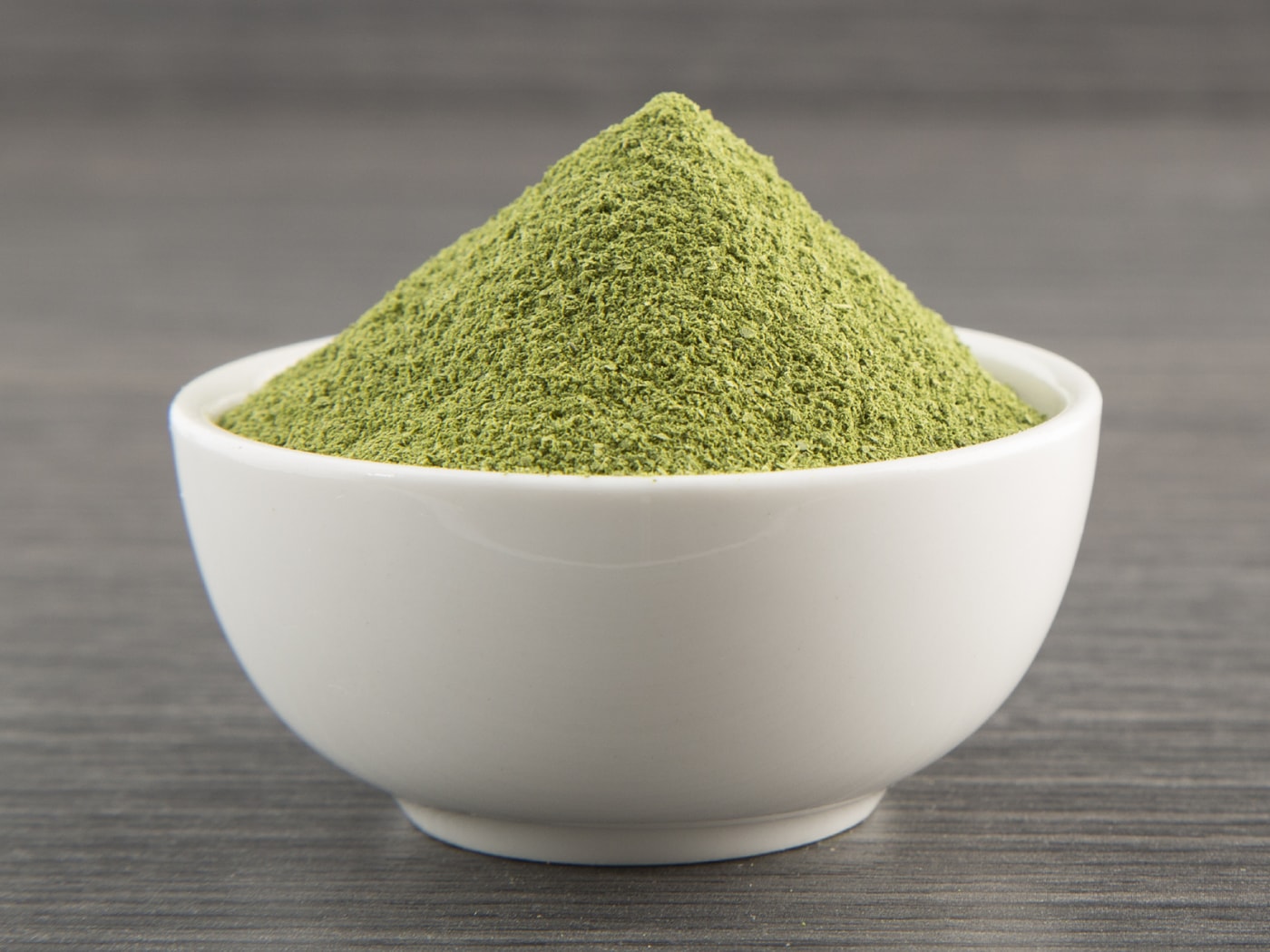
Ground moringa is a great way to add the superfood to smoothies, lattes and more.
We saw so much matcha in 2017 that I literally thought I might turn green. In 2018, our green fix will be coming from another source: moringa. This “superfood,” which has been growing in popularity for a few years, is made from the leaves of the Moringa tree, which grows in the Northwest region of India, as well as the Philippines, Thailand, Malaysia, Burma and parts of Africa. Its bright green leaves are dried and then ground to make a powder that has an earthy flavor, not unlike that of matcha, but with more of a veggie-forward taste. The entire plant can be used and Moringa has been touted for its potent nutrition profile.
Dr. Carrie Waterman from the University of California at Davis has been studying moringa for several years and published a report last summer comparing the anti-inflammatory properties of moringa to those of turmeric and found that moringa is more potent than turmeric.
Look for moringa in smoothies, bowls, bars, and yes, lattes, in the coming year. It's also readily available in powder-form, protein bars and energy shots from companies like Kuli Kuli. And chefs are getting into moringa, too. Chef Gerardo Gonzalez of Tribeca’s Lalito, uses moringa in his chickpea guacamole to add “great flavor but also to create the green color needed to make the dip look just like the real thing.”
https://www.today.com/food/healthy-food-trends-2018-t120107

Click Here For More Articles

Don't forget to opt-in to Our Healthy Living Society and get 3 free gifts while receiving the latest information on health, well-being and groundbreaking news about natural nutrition.
Monday, 1 January 2018

6 New Year’s Resolutions for a Happy – and Healthy – 2018!

The new year can be an exciting time, brimming with the promise of fresh starts and new beginnings. It’s also an opportunity to recommit to your health and well-being: Eat better. Exercise three times each week. Drink more water.
Creating these resolutions is easy enough. Sticking to them beyond the month of January, however, is another story.
Whether the new year has you feeling totally inspired or a tad overwhelmed, Johns Hopkins experts have some advice to help you make – and keep – your healthy resolutions for 2018.

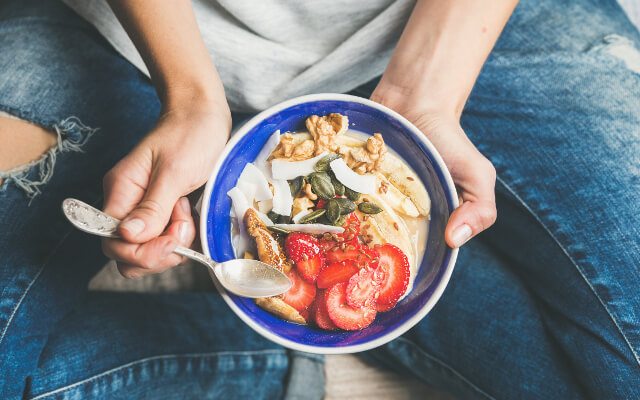
1. Practice mindful eating

A person sitting with a bowl of healthy granola
These days, it’s common to chow down with your eyes glued to a screen, but eating when you’re distracted leads to overeating. Take time to slow down and pay attention to your food, pausing to put down utensils between bites. “When you eat mindfully, it’s easier to notice when you feel full, plus you’re more likely to enjoy the foods you eat,” says Johns Hopkins dietitian and research nutritionist Diane Vizthum.

2. Chill out and rest up

An old man sleeping in his bed
According to Johns Hopkins sleep expert Rachel Salas, M.D., when it’s time to sleep, it’s time to chill – literally. Knocking the thermostat down to 68 degrees or lower before you tuck into bed can help you sleep better. Darken your room by drawing the curtains or dimming the display on your alarm clock to really get those quality Zs.

3. Adopt an attitude of gratitude

A young woman holding a journal
Take some time at the beginning or end of the day to reflect on what you’re grateful for. “A daily grateful check-in or keeping a grateful journal is a way to shift your focus and minimize the distorting influence of stress. Reminding ourselves of the small, everyday positive aspects of our lives helps to develop a sense of balance and perspective that can enhance well-being,” says Johns Hopkins psychiatrist Susan Lehmann, M.D.

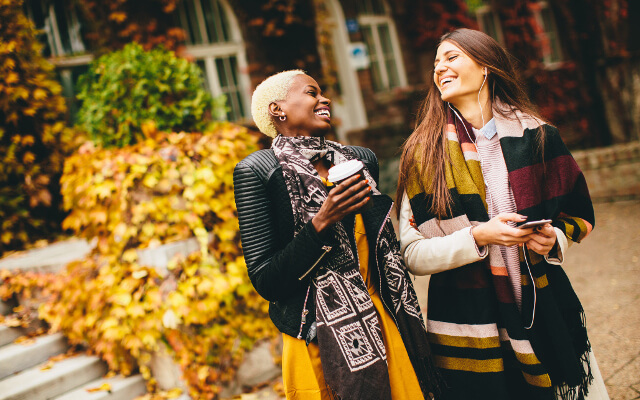
4. Find 30 minutes a day to walk

Two women walking together and laughing
Getting the recommended 30 minutes of exercise each day can be as simple as taking a walk. If you’ve got a busy schedule, take three 10-minute walks throughout your day. “That’s 10 minutes before work, 10 minutes at lunch and then 10 minutes after work. Make it fun! Grab a partner at work to get you through your lunch routine. Then have a friend or family member meet you for an evening stroll,” suggests Johns Hopkins physical therapist Stacie Page.

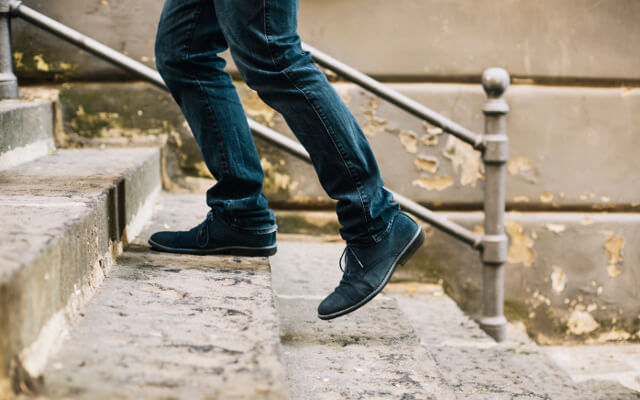
5. Take the stairs

A person walking up the stairs
Making small, daily changes such as taking the stairs instead of the elevator may seem minor, but they can make a big difference for your heart in the long run. “Individuals who are physically active are much less likely to develop cardiovascular disease,” explains Johns Hopkins cardiologist Chiadi E. Ndumele, M.D., M.H.S.

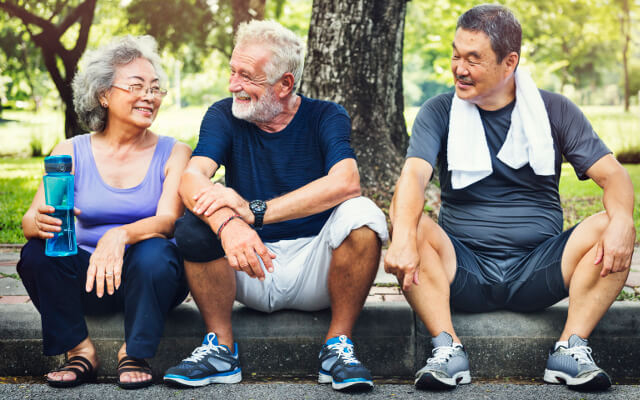
6. Commit to a 30-day fitness challenge

A group of three active seniors sitting on a curb after an exercise
Pick a fitness activity that’s easy and doesn’t require equipment, and commit to it for 30 days. There are many options to challenge yourself: practicing yoga, taking regular walks or joining a fitness class. “Find what motivates you. Whatever you do, make yourself accountable or find an accountability partner. Whether your goal is to lose weight, lower cholesterol or have more energy to play with young ones, you have the power to make a change,” encourages Page.
As always, talk with your doctor before beginning your journey to a healthier you
https://www.hopkinsmedicine.org/health/articles-and-answers/wellbeing/healthy-new-years-resolutions

Click Here For More Articles

Don't forget to opt-in to Our Healthy Living Society and get 3 free gifts while receiving the latest information on health, well-being and groundbreaking news about natural nutrition.

Congratulations on the beginning of a new year!

We here at Ankh Rah would like to wish you a healthy and happy 2018!
www.ankhrah.com

Click Here For More Articles

Don't forget to opt-in to Our Healthy Living Society and get 3 free gifts while receiving the latest information on health, well-being and groundbreaking news about natural nutrition.