
Saturday, 6 April 2019

Genetic mutation that makes woman feel no pain!


Discovery in 71-year-old Jo Cameron may aid the development of new pain relief treatments


Doctors have identified a new mutation in a woman who is barely able to feel pain or stress after a surgeon who was baffled by her recovery from an operation referred her for genetic testing.
Jo Cameron, 71, has a mutation in a previously unknown gene which scientists believe must play a major role in pain signalling, mood and memory. The discovery has boosted hopes of new treatments for chronic pain which affects millions of people globally.
Cameron, a former teacher who lives in Inverness, has experienced broken limbs, cuts and burns, childbirth and numerous surgical operations with little or no need for pain relief. She sometimes leans on the Aga and knows about it not from the pain, but the smell. “I’m vegan, so the smell is pretty obvious,” she says. “There’s no other burning flesh going on in the house.”


But it is not only an inability to sense the pain that makes Cameron stand out: she also never panics. When a van driver ran her off the road two years ago, she climbed out of her car, which was on its roof in a ditch, and went to comfort the shaking young driver who cut across her. She only noticed her bruises later. She is relentlessly upbeat, and in stress and depression tests she scored zero.
The moment of realisation came when Cameron had x-rays for a bad hip. Now and again her hip would give way, making her walk lop-sided. For three or four years, her GP, and then the hospital, turned her away because she was not in pain. When she was finally scanned, the x-rays revealed massive deterioration of the joint. “I’d not had a twinge. They couldn’t believe it.”“I knew that I was happy-go-lucky, but it didn’t dawn on me that I was different,” she says. “I thought it was just me. I didn’t know anything strange was going on until I was 65.”
Cameron duly had her hip replaced, coping on two paracetamol the day after. But while she was in the hospital, doctors noticed that her thumbs were deformed by osteoarthritis. They immediately booked her in for double hand operation, a procedure described as “excruciating” by one surgeon. Again, Cameron felt almost no pain after the operation. A consultant, Devjit Srivastava, who was overseeing her care at Raigmore hospital in Inverness, was so stunned that he referred her to pain specialists at UCL in London.
In a case report published on Thursday in the British Journal of Anaesthesia, the UCL team describe how they delved into Cameron’s DNA to see what makes her so unusual. They found two notable mutations. Together, they suppress pain and anxiety, while boosting happiness and, apparently, forgetfulness and wound healing.
The first mutation the scientists spotted is common in the general population. It dampens down the activity of a gene called FAAH. The gene makes an enzyme that breaks down anandamide, a chemical in the body that is central to pain sensation, mood and memory. Anandamide works in a similar way to the active ingredients of cannabis. The less it is broken down, the more its analgesic and other effects are felt.
The second mutation was a missing chunk of DNA that mystified scientists at first. Further analysis showed that the “deletion” chopped the front off a nearby, previously unknown gene the scientists named FAAH-OUT. The researchers think this new gene works as a volume control on the FAAH gene. Disable it with a mutation like Cameron has and FAAH falls silent. The upshot is that anandamide, a natural cannabinoid, builds up in the system. Cameron has twice as much anandamide as those in the general population
When the researchers explained the mutations to Cameron, a lot of her past made more sense. The time she broke her arm as an eight-year-old and didn’t tell anyone for days until the bone started resetting at a funny angle. That she could eat scotch bonnet chillies and feel only a “pleasant glow” in her mouth. That she is always ironing herself, and that her multiple cuts and burns heal so swiftly.
“I was quite amused when I found out,” Cameron said. “And then they told me about these other things, the happiness and the forgetfulness. I’m always forgetting things; I always have done. It’s good in lots of ways but not in others. I don’t get the alarm system everyone else gets.”
Cameron’s mother felt pain normally, as does her daughter. But her son, who carries the second and more important mutation, has a dulled sense of pain. He never takes painkillers and frequently scalds his mouth with hot drinks and food. Scientists suspect that Cameron’s father may have passed the mutation on to her.
James Cox, a researcher on the study, said that in extreme cases, mutations can lead people to feel no pain whatsoever. “This patient doesn’t have a complete loss of pain sensitivity, but we do see that. When they are young, they typically bite off parts of the tongue, and parts of their fingers because they haven’t learned that it’s dangerous.”
Cox said of Cameron: “There’s an awful lot we can learn from her. Once we understand how the new gene works, we can think about gene therapies that mimic the effects we see in her. There are millions of people living in pain and we definitely need new analgesics. Patients like this can give us real insights into the pain system.”
Cameron hopes that talking about her condition might boost scientific progress. “There may be more like me who are out there that haven’t realised what is different about them,” she says. “If they go and help out with the experiments, it may do something to get people off manmade painkillers and on to more natural ways of relieving pain.”
Don't forget to opt-in to Our Healthy Living Society and get 3 free gifts while receiving the latest information on health, well-being and groundbreaking news about natural nutrition.

Friday, 5 April 2019

Hormone Replacement Therapy = Increased risk of Alzheimer's Disease


HRT raises risk of Alzheimer's, researchers confirm image
Hormone replacement therapy (HRT) can increase the risk of Alzheimer's disease—and women who have taken it for 10 years are the most vulnerable, a new study has discovered.
Women are more likely than men to develop Alzheimer's, and taking HRT increases the risk by a further 19 per cent.
The latest research turns on its head earlier studies that had thought HRT had a protective effect against Alzheimer's and dementia because it kept levels of estrogen higher.
Researchers from the University of Helsinki in Finland analysed files on more than 84,000 Finnish women who were diagnosed with Alzheimer's between 1999 and 2013 and compared them to a similar number of non-Alzheimer's women, before assessing medical histories, including the use of HRT.
They discovered that women taking estradiol-only HRT had a slightly lower risk of 9 per cent, but it rose to 17 per cent for those taking the more common estrogen-progestogen HRT preparations.
The researchers think that maintaining levels of estradiol beyond the menopause could be a factor in the development of Alzheimer's.
They point out that their research merely shows an association, and this doesn't prove a cause, although compounds from HRT have been seen in brain plaques that are common in Alzheimer's patients.
References

(Source: BMJ 2019; 364: 1665)
Click Here For More Articles

Don't forget to opt-in to Our Healthy Living Society and get 3 free gifts while receiving the latest information on health, well-being and groundbreaking news about natural nutrition.

The Chemistry of Fried Food


You know it, and you love it. Fried food! But there’s more to fried dishes than just plopping food into hot oil. You have to know what’s up with the food you’re cooking and what oils will work best for your dish.


Click Here For More Articles

Don't forget to opt-in to Our Healthy Living Society and get 3 free gifts while receiving the latest information on health, well-being and groundbreaking news about natural nutrition.

Vegans are the Healthiest!

Vegans are the Healthiest and May Outlive The Rest Of Us, Says Study


•New study says vegans have lower levels of fat and higher levels of antioxidants in their body.
•Research has shown that antioxidants may prevent certain diseases, like cancer.
•Vegans also have more anti-inflammatory properties in their bodies.
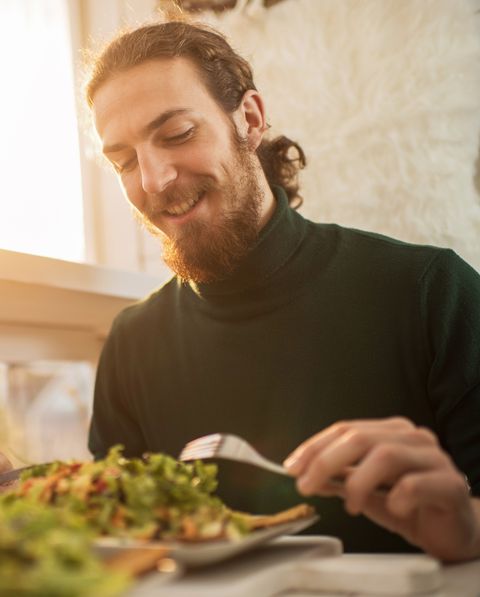
Young happy man enjoying in a healthy meal.
BRAUNSGETTY IMAGES
Scoff at the guy ordering an oat milk latte and vegan breakfast burrito all you want, but he may just live longer than you. At least according to one new study.
It's not exactly news that bypassing meat could prolong your life since past research has linked plant-based diets to a decreased risk of cancer, heart disease, and blood pressure. The latest study, published in The Journal of Nutritionlooked at how various diets impact biomarkers, like antioxidants such as carotenoids. They found that vegans have the most antioxidants in their bodies, presumably because they eat more vegetables and fruit.

Here's how they determined that vegans may live the longest:

The study included 840 people who followed five eating styles, which included the following: vegans (no animal products consumed), lacto-ovo vegetarians (eggs and dairy are allowed but fish and meat are off-limits), pesco-vegetarians (people who eat fish but not meat), semi-vegetarians (meat is consumed less than once a week, but more than once a month), and non-vegetarians.
Study participants gave blood, urine, and fat samples, which scientists studied for antioxidant, saturated fat, unsaturated fat, and vitamins levels.
      Turns out, vegans had the highest levels of carotenoids (an antioxidant), as well as isoflavones, and enterolactone, a compound that may decrease inflammation. Higher levels of chronic inflammation are linked to a range of diseases, including cancer.
      Vegans also had more omega-3 fatty acids in their bodies, which may come as a surprise because the nutrient is typically associated with fish. However, walnuts, flaxseeds and chia seeds are all plant-based foods with omega-3s. And while vegetarians had similar biomarkers, the results for semi-vegetarians wasn't drastically different from those who ate meat.
      Of course, this isn't to say you should give up meat if you want to live longer. Participants reported dietary and lifestyle habits, which always leaves room for error. But this study is a good push to include more fruits and vegetables in your diet.

      Click Here For More Articles

      Don't forget to opt-in to Our Healthy Living Society and get 3 free gifts while receiving the latest information on health, well-being and groundbreaking news about natural nutrition.

      Thursday, 4 April 2019

      What This Cancer Researcher Eats In A Day To Beat Disease!


      We always hear about those one-off studies finding things like "compounds in blueberries promote brain health" or "an antioxidant in green tea may prevent breast cancer." And while they're fun and exciting and may cause us to change our eating habits for a couple of days, they really don't tell you all that much. After all, our overall diet—and the interplay of a variety of different foods and nutrients—is a much better predictor of health and future disease risk than whether or not we're simply eating a whole lot of spinach.
      That's not to say the information from these studies isn't useful—it's just that, for the average person, figuring out how to put it all together is pretty hard. Fortunately, that's exactly what world-renowned physician and researcher William Li, M.D., has done in his new book Eat To Beat Disease: The New Science of How Your Body Can Heal Itself.
      In his book, Li gives a science-backed approach to using food as medicine. He explains how the body naturally resists chronic diseases like cancer and dementia through five health defence systems (angiogenesis, regeneration, the microbiome, DNA protection, and immunity) and what exactly we should be eating to activate these defence systems.
      Pretty cool. But that got us thinking: What does the man who literally wrote the book on eating to beat disease actually eat on a daily basis? I was lucky enough to chat with Li to find out. While he emphasized that no day is "typical" and that there are a variety of ways to eat a healthful diet, he did share some meals you might find him eating on a pretty regular basis.

      Breakfast
      For breakfast, Li tends to keep things very light, starting with either a cup of whole-leaf green tea or espresso and some fruit, like kiwi. "Green tea and coffee are what I call Grand Slammer foods, and what I mean by that is they activate all five health defence systems in the body," he says. Kiwis are also Grand Slammers, and they're particularly great at protecting DNA, which can help slow cellular aging and reduce cancer risk. "A kiwi a day has actually been shown to reduce damage to DNA by about 60 percent," he says.
      Occasionally he'll have a slice of toast as well. Not just any toast, though—whenever possible, Li opts for a high-quality sourdough. "I eat it for its impact on my microbiome," he says. "Sourdough is made with Lactobacillus reuteri, a healthy gut bacteria that helps activate our immune system and speed healing. It also activates our brain and prompts it to release the social, feel-good hormone oxytocin. The research has shown that even when the bacteria is killed by the cooking process, the remnants of the bacteria will still have all those benefits. It's quite amazing." Consider our minds blown.   
      When Li is travelling, he might add in a couple of pieces of hard cheese such as Gouda, Muenster, or Camembert in the morning, which are often part of the European breakfast spread. The reason for hard cheeses, specifically? They're a great source of vitamin K2(also found in egg yolks and chicken thighs), which is not only heart-healthy but anti-angiogenic as well, meaning it helps slow the formation of blood vessels that promote tumour growth. (Fun fact: Li rose to fame in 2010 when his TedTalk on anti-angiogenic foods, Can We Eat To Starve Cancer? went viral. We highly recommend watching.)
      Lunch
      Li likes to go heavy on the plants at lunch and often leans toward salads made with nutrient-packed leafy greens like arugula, spinach, radicchio, or mâche. "Leafy greens, particularly those in the brassica family, contain special compounds that are anti-angiogenic, protect DNA, and boost the immune system," he says. He'll also add some nuts and seeds, which activate multiple defence systems in the body, olive oil-based dressing, and fatty fish. "I enjoy smaller tinned fish like sardines, mackerel, or anchovies," he says. "They're lower on the food chain, which means they're lower in mercury, but they still contain beneficial omega-3 fatty acids."
      From time to time, Li will skip lunch altogether. "Skipping lunch or breakfast now and then reduces caloric intake, which improves your telomeres—the caps of DNA on the end of your chromosomes—and is associated with cellular longevity," he says. "I don't purposely fast to lose weight or become ketogenic, but I'm mindful that doing this a couple of days a week has some benefit."
      Dinner
      Dinner is Li's biggest meal of the day, and he pays special attention to what's fresh and in season. "I tend to build my meal around a core vegetable first and then think about how to make that vegetable as tasty as possible." One of Li's favorite veggies to prepare at dinner is roasted radicchio, which he slices in half, drizzles with olive oil, and cooks for about 15 minutes in the oven. "Radicchio is one of those vegetables that activates multiple defence systems at the same time," he says. Of course, that's not enough by itself. To go along with it? He'll pair it with something like a steamed fillet of fish and roasted purple potatoes with rosemary. "Research has shown that the natural pigment that makes these potatoes purple actually kills cancer stem cells, which are the really bothersome cells that allow cancer to keep coming back."
      He'll even eat pasta from time to time, but he knows exactly how to ramp up its disease-fighting potential. First, he'll go for whole-wheat pasta, with the shell of the grain present, which contains anti-angiogenic and immune-boosting properties. As for the sauce, all varieties of tomatoes (when cooked) contain a highly absorbable form of the powerful, cancer-starving carotenoid antioxidant lycopene—but, whenever possible, Li will opt for San Marzano or cherry tomatoes, which have the highest lycopene levels. Then, he'll add a glug of olive oil for even more disease-fighting benefits. But not just any olive oil. "I always look at the bottle to see if they identify the type of olive," says Li. His top choice? Extra-virgin olive oil made with Greek Koroneiki olives, which are a particularly potent source of hydroxytyrosol, an immune-enhancing, anti-angiogenic, DNA-protecting polyphenol compound. To top it all off? He might add some capers, which pack a hefty dose of the antioxidant quercetin, which is anti-inflammatory and may help inhibit the growth of several types of cancer.
      Snack
      For a sweet fix, Li gravitates toward chocolate (don't we all?). "I'll have a small piece of dark chocolate, 70 percent cacao or higher, which is one of those Grand Slamming foods," he says. "It tastes great and you don't need a lot."
      For more from Li, check out our excerpt from Eat To Beat Disease on foods that stimulate the immune system.


      Don't forget to opt-in to Our Healthy Living Society and get 3 free gifts while receiving the latest information on health, well-being and groundbreaking news about natural nutrition.


      Melatonin: An Unlikely Antioxidant with Growth Receptors in the Skin


      We all know melatonin as a sleeping pill because it is released by the pineal gland in the brain, and helps us fall asleep at night when it is dark. Melatonin is very connected with our circadian rhythm and the environment.  

      Recently it was discovered that melatonin’s endocrine properties extend to the skin and hair. Could that be why animals shed their fun in the summertime and grow thicker fur in the winter time? Perhaps.

      We do know for sure that there are melatonin receptors in the skin and hair follicles.1Our skin makes the melatonin that is needed to keep our skin healthy and youthful. Taking melatonin orally does not have the same effect and therefore you may see a surgent of melatonin topical products.


      Melatonin keeps our skin healthy and youthful by 2 major mechanisms. It has antioxidant effects that neutralize the oxidative damage from the sun2-4, and by stimulating growth receptors in the skin.1

      The antioxidant effects of melatonin are so strong, they are thought to be strong and more potent than glutathione2, Vitamin C3, and Vitamin E.4

      Melatonin is also being studied in other areas of health, such as neurodegenerative diseases, cancers, and anti-aging in general. 


      References
      1. Kleszczynski K, Fischer TW. Melatonin and human skin aging. Dermato-Endocrinology 4:3, 245–252; July–December 2012; 
      Click Here For More Articles

      Don't forget to opt-in to Our Healthy Living Society and get 3 free gifts while receiving the latest information on health, well-being and groundbreaking news about natural nutrition.
      Avocado seeds could be another superfood!


      Avocado seeds could be another superfood image
      Avocado is a super food—but so too could be its large seeds. They have anti-inflammatory qualities that could treat gut problems such as ulcerative colitis, say researchers.
      They are hoping the seeds will eventually be developed as a functional food to fight a range of other inflammatory diseases, too, such as arthritis, heart disease and some cancers.
      Researchers from Penn State have been developing seed extract for the past decade as a food colourant of "a vibrant orange colour". But they also discovered that the seeds had anti-inflammatory properties.
      These tests have so far been carried out in laboratory cell cultures and the next step will be research using rodents before they are eventually tested on people.
      The anti-inflammatory properties have been seen at low levels that suggest they could be developed as a functional food ingredient, says lead researcher Joshua Lambert.
      The seeds are currently thrown away with the garbage—and so instead of being piled into a landfill, the seeds could one day be another therapeutic agent to help treat a wide range of inflammatory diseases, he said.
      References
      (Source: Advances in Food Technology and Nutritional Sciences, 2019; 5: 8)
      Click Here For More Articles

      Don't forget to opt-in to Our Healthy Living Society and get 3 free gifts while receiving the latest information on health, well-being and groundbreaking news about natural nutrition.

      Wednesday, 3 April 2019

      Ian's Fast Relief From Sciatica!

      www.ankhrah.com

      Click Here For More Articles

      Don't forget to opt-in to Our Healthy Living Society and get 3 free gifts while receiving the latest information on health, well-being and groundbreaking news about natural nutrition.

      Most drugs contain allergens that can trigger reaction

      Most drugs contain allergens that can trigger reaction image

      Almost every prescription drug contains at least one ingredient that can cause an adverse reaction or life-threatening allergic reaction in someone who's sensitive.
      More than 90 per cent of prescription medication contain ingredients such as lactose, peanut oil, gluten or chemical dyes to improve shelf life, taste or absorption.
      Researchers from Brigham and Women's Hospital were inspired to carry out the research after hearing of a case of a person with celiac disease who was unwittingly prescribed a drug that contained gluten.
      They tested 42,000 prescription pills and found they contained a total of 354,000 'inactive' ingredients. Just 7 per cent were free of any compounds.
      Lactose was the most common ingredient, found in 45 per cent of drugs they tested, and 33 per cent included a food dye. Just 33 drugs contained peanut oil, although this could be lethal in someone with extreme sensitivity.
      Severe reactions can include an anaphylactic shock, breathing difficulties and gastrointestinal symptoms. The researchers weren't sure of the amount of an ingredient that was needed to trigger a severe reaction, and so couldn't estimate just how common these reactions were.
      "While we call these ingredients inactive, in many cases they are not. While the doses may be low, we don't know what the threshold is for individuals to react in the majority of cases," said lead researcher C. Giovanni Traverso.
      References
      (Source: Science Translational Medicine, 2019; doi: 10.1126/scitranslmed.aau6753)
      Click Here For More Articles

      Don't forget to opt-in to Our Healthy Living Society and get 3 free gifts while receiving the latest information on health, well-being and groundbreaking news about natural nutrition.

      Tuesday, 2 April 2019

      10 Foods that flush out toxins and melt the fat!


      Click Here For More Articles

      Don't forget to opt-in to Our Healthy Living Society and get 3 free gifts while receiving the latest information on health, well-being and groundbreaking news about natural nutrition.

      Top Ten Toxic Foods!


      Click Here For More Articles

      Don't forget to opt-in to Our Healthy Living Society and get 3 free gifts while receiving the latest information on health, well-being and groundbreaking news about natural nutrition.

      Don’t Underestimate the Health Benefits of These 8 Vegetables!

      When you think of a healthy vegetable what first springs to mind? Kale? Broccoli? Or some other trendy superfood? Although it probably can’t hurt to jump on a popular veggie’s bandwagon, it’s also good to remember the nutritious merits of the vegetables that tend to fly under the radar. Don’t underestimate the benefits of these eight healthy veggies.

      1. BEETS

      When it comes to healthy root vegetables, it’s hard to beat beets. A cup of beets contains about 58 calories, 4 grams of fiber, 11 percent of the recommended daily intake of vitamin C and 37 percent of folate. Beets also are an excellent source of iron, magnesium, manganese and potassium. Among their many health benefits, beets might help to lower blood pressure — thanks to their high levels of nitrates, which work within the body to relax blood vessels, according to Harvard Medical School. Research also has shown that beets possess antioxidant and anti-inflammatory effects, which might make them beneficial against inflammatory diseases and even cancer.

      2. BRUSSELS SPROUTS

      Fresh organic Brussels sprouts in a wooden trayCredit: fcafotodigital/Getty Images
      Brussels sprouts might get a bad rap in the healthy vegetable world for their strong flavor. But they certainly have their place in a nutritious diet. A cup of boiled Brussels sprouts contains about 56 calories with 4 grams of fiber, 24 percent of your daily intake of vitamin A, 162 percent of vitamin C and a massive 274 percent of vitamin K. Plus, a cup of sprouts has about 6 percent of your daily calcium intake, 10 percent of iron, 14 percent of potassium and 18 percent of manganese — among other nutrients. According to Healthline, Brussels sprouts contain antioxidants that can protect the body against cancer, decrease inflammation and improve heart health. They’re also “one of the best plant sources of omega-3 fatty acids,” which can reduce inflammation and blood triglycerides, as well as slow cognitive decline.

      3. CABBAGE

      Although cabbage often is associated with unhealthy dishes, such as mayonnaise-laden coleslaw, it’s actually very nutritious on its own. A cup of chopped cabbage has only about 22 calories but several vitamins and minerals — including 54 percent of the recommended daily intake of vitamin C, 85 percent of vitamin K, 10 percent of folate and 7 percent of manganese. The properties in cabbage might help with chronic inflammation, keep the digestive system healthy and reduce your risk of cardiovascular disease. Plus, several studies have linked cruciferous vegetables — cabbage included — to a lower risk of cancer. So throw some chopped cabbage into your salads or enjoy it in other healthy dishes for these added benefits.

      4. CAULIFLOWER

      Another underrated member of the cruciferous vegetable family is cauliflower, which often plays second fiddle to its darker green cousins. A cup of raw cauliflower only has about 25 calories. But it packs a healthy punch with 3 grams of fiber, 77 percent of your daily intake of vitamin C, 20 percent of vitamin K, 11 percent of vitamin B6, 14 percent of folate, 9 percent of potassium and 8 percent of manganese. Plus, cauliflower is full of antioxidants, which can help to protect your body against cancer and other diseases, according to Healthline. And it’s high in choline, a nutrient that works throughout the body to keep cells functioning and prevent disease.

      5. ONIONS

      Raw onion, with some chopped, on a wooden cutting boardCredit: Qwart/Getty Images
      cup of chopped onions — not that you’d probably eat that much in one sitting — has 64 calories with 3 grams of fiber, 20 percent of your daily intake of vitamin C, 10 percent of vitamin B6, 8 percent of folate, 7 percent of potassium and 10 percent of manganese. And just like many of the other veggies on this list, onions are full of antioxidants and other compounds that can boost heart health and fight cancer, according to Healthline. Plus, research has shown they might help to control blood sugar, improve digestive health and even support strong bones. That might just make the tears from chopping those onions worthwhile.

      6. RADISHES

      Radishes often are an afterthought in salads. But don’t underestimate what this root veggie can do for you. A cup of radish slices is only 19 calories — with 2 grams of fiber, 29 percent of your daily intake of vitamin C, 7 percent of folate, 8 percent of potassium and small amounts of many other vitamins and minerals. “Radishes come in a wide variety of colors, including red, pink, purple and white,” according to Cleveland Clinic. “These cruciferous crops include fiber for digestive health, phytonutrients that protect against many diseases, and a pungent flavor that will help clear clogged sinuses or soothe a sore throat.”

      7. ROMAINE LETTUCE

      Maybe you’ve avoided romaine lettuce for a while because of the recent recalls — obviously a healthy choice at the time. But don’t forget about its high nutritional value. One cup of romaine is only about 8 calories. And for those 8 calories you get a gram of fiber, 82 percent of your recommended intake of vitamin A, 19 percent of vitamin C, 60 percent of vitamin K, 16 percent of folate, 2 percent of calcium and 3 percent of iron, among other nutrients. In fact, when compared to some other salad greens, romaine tops them for many of the nutrient levels — especially vitamin A, which is essential for vision, cellular function, the immune system, reproductive health and more.

      8. WATERCRESS

      fresh watercress on wooden cutting boardCredit: yodaswaj/Getty Images
      Watercress — a peppery little leafy green also of the cruciferous veggie family — has quietly been gaining superfood status as more people recognize its health benefits. A cup of chopped watercress is a mere 4 calories — containing 22 percent of your daily intake of vitamin A, 24 percent of vitamin C, an impressive 106 percent of vitamin K, 4 percent of calcium and small amounts of other nutrients. “Watercress packs a massive amount of disease-fighting antioxidants such as lutein and beta carotene into a tiny number of calories,” Cleveland Clinic says. So use it to add a fresh, peppery flavor to dishes, and enjoy the easy nutrient boost.

      Click Here For More Articles

      Don't forget to opt-in to Our Healthy Living Society and get 3 free gifts while receiving the latest information on health, well-being and groundbreaking news about natural nutrition.

      Monday, 1 April 2019

      Cell tower blamed for sudden rise in cancer cases at school!

      Cell tower blamed for sudden rise in cancer cases at school image
      Parents are blaming a cell tower for a sudden rise in cancer cases among students and teachers at an elementary school and are calling to have it removed.
      Four students and three teachers at a school in Ripon, San Joaquin, California have developed cancer in the past four years—and parents are convinced that the tower, which was installed on the school grounds a few years ago, is responsible.
      District authorities are refusing to remove the tower and say it meets the safety requirements of federal regulations. The district receives $2,000 a month from Sprint, the tower's operator, and parents fear the authority's position has been influenced by the payment.
      Monica Ferrulli, whose son developed cancer while at the school, said she was told by doctors that the cancer was caused by exposure to something in the environment. Another parent, Joe Prime, whose child has also developed cancer, says it is time to take down the tower before there are more cases. "It just seems like a coincidence is no longer a reason for all this illness. Kids shouldn't be guinea pigs and we shouldn't be taking chances with the children's lives."
      Several countries, including France, ban all cell towers and wi-fi from elementary school premises because of concerns that children are especially vulnerable to the radiation.
      References
      (Source: CBS Sacramento)
      Click Here For More Articles

      Don't forget to opt-in to Our Healthy Living Society and get 3 free gifts while receiving the latest information on health, well-being and groundbreaking news about natural nutrition.