Showing posts with label pepper. Show all posts

Friday, 3 April 2015

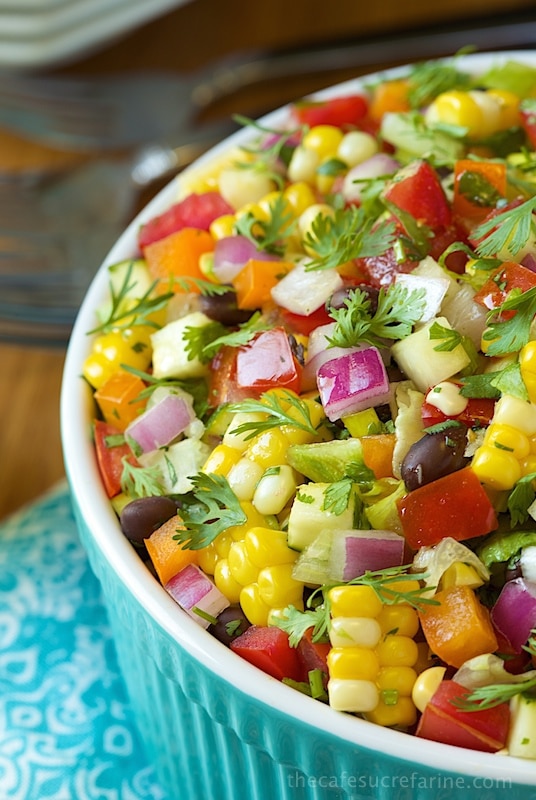
MEXICAN CHOPPED SALAD


Back to my Mexican Chopped Salad. It’s the kind of salad I can never get enough of; fresh, vibrantly colored, loaded with flavor. Eating it, makes me feel energetic and healthy. The dressing I created is light and bright, with just a few ingredients; fresh lime juice, honey, a clove of garlic and a splash of oil. A pinch of cumin along with sea salt and freshly ground black pepper finish it off perfectly. I love simple recipes like this.
Mexican Chopped Salad. The freshest, healthiest, most delicious salad with lots of Southwestern flair!
If you like a little crunch in your salad, like we do, be sure to pick up a package of corn tortillas. That’s what you’ll use to make the crispy topping for this wonderful salad. Just slice them up, drizzle with a bit of oil and pop the pan in the oven till they’re gloriously golden brown; a perfect complement.
Mexican Chopped Salad. The freshest, healthiest, most delicious salad with lots of Southwestern flair!
If you’re craving fresh and delicious, be sure to add these ingredients to your grocery list. Make this Mexican Chopped Salad and enjoy it for dinner along with some grilled chicken, pork or seafood. Then pack it up for lunch the next day, as it keeps quite well. Just a warning though; all your co-workers will be drooling over your delicious, brightly colored lunch. Enjoy!
Mexican Chopped Salad. The freshest, healthiest, most delicious salad with lots of Southwestern flair!
4.9 from 15reviews
MEXICAN CHOPPED SALAD
 
The freshest, healthiest, most summery salad. It's loaded with fabulous Southwestern flavor.
Author: 
Recipe type: Salad
Cuisine: Mexican, Southwestern
Serves: 6-8 as a side
INGREDIENTS
  • Ingredients for the dressing:
  • ¼ cup fresh lime juice
  • 2 tablespoons honey
  • ½ teaspoon cumin
  • 1 clove garlic
  • ½ teaspoon salt
  • 2 tablespoons canola oil
  • 2 tablespoons extra virgin olive oil
  • freshly ground black pepper
  • taste and add salt if needed
  • Ingredients for the tortilla strips:
  • 6 6-inch corn tortillas
  • 1 ½ tablespoons canola oil
  • ½ teaspoon sea salt

  • Ingredients for the salad:

  • 1 medium head romaine lettuce , chopped in approximately ½ inch pieces
  • 1 medium bell pepper, diced in ¼-inch pieces, I used small orange-hued peppers (the mini ones). Feel free to use whichever color you want.
  • ½ medium red onion, diced in ¼-inch pieces
  • ½ medium jicama, peeled and diced in ¼-inch pieces
  • 1 medium zucchini, diced in ¼-inch dice
  • 4 medium tomatoes, seeded and diced into ¼-inch dice
  • 4 ears corn (if fresh corn is not in season, substitute 1½ cups of sweet, tiny frozen corn)
  • 1½ cups canned black beans, drained and rinsed
  • ½ cup finely chopped cilantro, plus whole cilantro leaves for garnish, if desired
INSTRUCTIONS
  1. For the dressing, combine lime juice, honey, cumin garlic and salt. Stir to combine. In a slow, steady stream, add the oils, stirring continuously with a fork or small whisk. Taste and add more salt and pepper, if needed. Set aside.
  2. For the corn tortilla strips, preheat oven to 400˚F. Stack corn tortillas on a cutting board. Cut in half. Cut each stack of halves into thin strips, crosswise, about ¼ inch thick.
  3. Transfer tortilla strips to a sheet pan. Drizzle with oil. Sprinkle with salt and toss to coat.
  4. Bake for 15-20 minutes, stirring every 5 minutes, or until light golden brown and crisp. Set aside to cool.
  5. For the salad, place corn, two ears at a time, in the microwave and cook for 3½ minutes. Remove from microwave with a hot pad and allow to cool for 5 minutes. After cooling, cut bottom end of corn off, about 1½ inches from end. Pull back husk and silks (almost all of the silk should easily pull away). Cut kernels from husks and set aside.
  6. Combine corn and other salad ingredients in a large bowl. Stir to combine. Add dressing and stir to coat all ingredients. Garnish with cilantro leaves, if desired.
  7. Serve with tortilla strips on top or place a bowl on the side and let guests help themselves.
http://thecafesucrefarine.com/2014/05/mexican-chopped-salad/

Tuesday, 6 January 2015

Master Tonic 101


LOVE the "Master Tonic" recipe? Pin it on Pinterest!
  
Master Tonic looks like it cures everything and is easy to make and have on hand.
WEAR GLOVES!!
[I did not peel my garlic this time --- MUCH EASIER!!]
(photo credit: Simi Amiet)
Master Tonic Ingredients
1 part fresh chopped garlic cloves (antibacterial, antifungal, antiviral, antiparasitical)
1 part fresh chopped white onions, or the hottest onions available (similar properties to garlic)
1 part fresh grated ginger root (increases circulation to the extremities)
1 part fresh grated horseradish root (increases blood flow to the head)
1 part fresh chopped Cayenne peppers, Jalapenos, Serranos, Habeneros, African bird peppers....any combination of the hottest peppers available

(photo credit: Simi Amiet)

Preparation
· Fill a glass jar 3/4 of the way full with equal parts of the fresh chopped or grated ingredients. Fresh herbs are best. Then cover completely with raw unfiltered, unbleached, nondistilled apple cider vinegar. 

(photo credit: Simi Amiet)

· Close and shake vigorously and then top off the vinegar if necessary. Keep the jar in a cool, dark place for 2 weeks. (I store it in my cabinet with the drinking glasses so that I see it and remember to shake daily.) 

· Shake the tonic daily a couple of times. 

(photo credit: Simi Amiet)
Begin this formula on the NEW moon and strain and bottle on the FULL moon, (approximately 14 days). Filter the mixture through a clean piece of cotton (coffee filter or colander), bottle and label.
Usage:
Strain liquids from solids after steeping about 2 weeks.

May puree the solids and add to honey or lemon juice, or make salad dressing or marinade for meats. Master Tonic lasts indefinitely at room temperature, after straining
.

Dosage:
1/2 to 1 ounce, two or more times daily, as needed. I hear it is not only the cure for the common cold but every other disease of mankind. lol

Note: Store your Master Tonic in a dark place.

"This tonic is extremely powerful, because all the ingredients are fresh. Its power should not be underestimated. This formula is a modern day plague tonic. It is said that when added to an incurable routine it could cure the most chronic conditions and stubborn diseases. It stimulates maximum blood circulation, while putting the best detoxifying herbs into the blood. This formula is not just for the sniffles, it has helped to turn around the deadliest diseases."

"...I designed this formula as a fresh herb alternative to Dr. Christopher’s plague formula, to be more alive, a herbal juice tonic, and believe me, you don’t want to be without formulas like this when you or your loved ones get ill; it will save your life. Make up plenty, it can’t go bad because vinegar already is, and will last almost forever..," writes Dr. Shultz.

Quoted from Sam Biser’s “The Last Chance Health Report” on Killer Viruses: A formula for stopping them when drugs fail. http://www.its-my-health.com/documents/MasterTonic.pdf


I've seen it recommended to add all ingredients to the blender to puree, others coarsely chop the veggies. I've also seen it recommended to consume it on top of bread and butter.  And "if you eat it with cheese, it isn't even very spicy"?? The suggestion was to partake of it regularly in this way, like a condiment. :

Especially warming, if coming in from the cold, windy, wet weather. And, just sniff to clear the sinuses. 

Supposed to be helpful for bladder and kidney issues? (Maybe because it makes you drink a LOT of water. LOL)

Apparently, excess ginger can cause uterine contractions?? So, caution with pregnancy.

This article describes some of the myriad of benefits from a scientific (sorta) perspectivehttp://fairhillsfarm.com/2008/12/11/some-good-old-fashioned-horsera...
Also, delicious on fish, salmon, halibut, etc.

Here is a commercial version, without the horseradish: Blair's Mega Death Sauce- Feel Alive! http://www.hotsauceworld.com/blairmegdeat.html 

Maybe we need a bit of wasabi added?

Here it is Cyclone Cider Herbal Tonic:http://www.supplementwarehouse.com/viewitem.asp?idproduct=43121 It is an herbal extract of CAYENNE PEPPER, GARLIC, ONIONHORSERADISH ROOT, GINGER ROOT, PARSLEY in a base of raw apple cider vinegar. 

Between this and some raw milk kefir, we could cure the world. 


FAQs:
 http://heal-thyself.ning.com/profiles/blog/show?id=2814160%3ABlogPo...


Whew~ that is potent stuff!


I was brave. I took most of a tablespoon, without taste testing first and put it in the back of my mouth, gargled (sorta) a bit and felt it go alllllllll the way down to my navel. 

About half way down, I decided I needed a chaser.  My eyes were a bit teary. (I had an emergency banana sitting ready. But, left it uneaten.)


I made enough for the whole neighborhood, it appears! It cost about $20 for all the ingredients; and I have four mason jars full! I strained mine and I believe it will keep indefinitely. I saved the strained chopped bits in the freezer for adding to soups and stuff to spice it up.


I hunted for a recipe which included additional herbs and spices. Does anyone have one?

I know the following have natural antifungal, antiparsitic, antibacterial properties: black walnut hulls, wormwood, clove, raw pumpkin seeds, fennel, thyme, sage, goldenseal, oregano, water, salt, essential oils: cinnamon, lemongrass, thyme, peppermint, lavender, coriander; olive leaf extracts, vit C, onion, allspice, tarragon, cumin; capsicums, including chilies and other hot peppers; black and white pepper, ginger, anise seed, celery seed, and the juices of lemons and limes; cranberries, myrrh, turmeric, echinacea, licorice root, Pau d'arco, rosemary, basil, mint, anise, dandelion, honey, garlic.

So, I was curious about including these, or making an alternate tonic with some of them as an alternate to rotate. But, I wasn't sure about including them in the Master Tonic.


I LOVE my Master Tonic. I've been adding a teaspoon of it to a cup of bone broth occasionallys. It is deliciously zesty and invigorating!

(the thread that started it all)

Other references:
http://www.wikihow.com/Cure-an-Ailment-with-Homemade-Master-Tonic
http://www.annieappleseedproject.org/nattonfromri.html
Video: http://www.youtube.com/watch?v=7wQbGDmaKZc
http://www.ehow.com/how_2258276_cure-ailment-homemade-master-tonic....
http://sibasishfoundation.wordpress.com/sibasish-health-club/homema...

I put the whole peppers (with seeds and top little stem attached) in the food processor. De-seeding them seemed too difficult. My Master Tonic is wicked hot. It is easier in the food processor (than chopping/grating by hand) but leave the b...its coarse chopped, mine was diced to bits.

Use gloves!


Any jar will do. Mason jars are about $2 each at a (Ace) hardware store or Walmart of regular grocery. Or reuse an old mayo or pickle jar.

If you coarsely chop the ingredients, it is more mild than if you finely chop or puree the ingredients in a food processor. Coarse chopped makes it more palatable for children. Also, if you use a finer filter, like a coffee filter, rather than a metal strainer, more of the sediment is removed. Additionally, shaking it before each use increases the potency of flavor a LOT, lol. And imo, it is easier to swallow cold or warm, rather than room temp. And we chase it with honey. Diluted in water is another way to make it more palatable, sorta. ;-)

I add a shy tablespoon of the Master Tonic to a cup of bone broth. It is so zippy and warm and nourishing, especially when coming in from the winter cold, or first thing in the morning to get your blood moving!


(I did not make mine with the moon. I did not weigh or measure; I approximated the quantities very informally. I love my Master Tonic!!)

My understanding is that we shouldn't add ingredients after the ferment starts.

Monday, 4 August 2014

10 Reasons Why Cayenne Pepper Can Revolutionize Your Health

10 Reasons Why Cayenne Pepper Can Revolutionize Your Health

Cayenne pepper is one of my favorite spices. It has been used for culinary and medicinal purposes for thousands of years. It not only provides heat and flavor to your dishes, but it has also been credited with many health benefits.
This popular spice was originally grown in South and Central America, and is a member of the Capsicum family of vegetables, which are more commonly known as chili peppers. The spicy heat produced by cayenne is caused by its high concentration of a substance called capsaicin.
Below you will find how you can enhance your health with cayenne pepper, including some of the side effects that you should be aware of:
1. Reduces muscle and joint pain and inflammation
Applying topical applications of cayenne pepper can reduce muscle and joint pain and inflammation significantly. This is because cayenne has counter-irritant effect: if you rub cayenne on the affected area, it will cause a mild irritation to the tissue to which it was applied, thus distracting from the original more severe joint pain. The active ingredient in cayenne is a substance known as capsaicin. This chemical relieves pain by acting on the sensory nerves by hindering the transmission of a neurotransmitter responsible for transmitted pain signals to your brain. Find here a recipe for cayenne warming oil for joint, muscle and arthritis pain relief.
2. Relieves migraine
When cayenne pepper hits your stomach your brain starts to release endorphins, which are our body’s natural painkillers. So if you can bear the taste, add 1 to 3 teaspoons of cayenne pepper to a glass of water (8 ounces) to get instant relief of migraine headache. You can find here more natural tips and treatments to relieve migraine.
3. Increases metabolism
The capsaicin in cayenne pepper is known to increase metabolism by increasing the internal heat of the body. In order to increase heat, energy is needed, and thus cayenne pepper contributes to increased metabolism. Another theory by a South Korean research suggests that capsaicin might raise the metabolism by positively affecting proteins that help break down fat. You can find here more foods to increase your metabolism.
4. Improves blood circulation
Cayenne has been used to improve blood circulation in traditional Asian medicine as well as in the Indian medicine of Ayurveda. To improve blood circulation, some herbalists suggest taking a quarter-teaspoon three times a day or placing a poultice made with cayenne to boost circulation in a troublesome area. Eating spicy foods, which contain capsaicin from hot peppers increases blood flow throughout the body, and this is why many people become flushed when they eat certain spicy foods. Read here how to improve blood circulation and why it’s so important, and how to recognize symptoms of poor blood circulation.
5. Treats psoriasis
Applying a topical cream, ointment or gel containing capsaicin can help to relieve psoriasis symptoms. According to one study, applying capsaicin cream to the skin relieved itching and skin lesions in people with psoriasis. The concentration of capsaicin in these applications can vary. Higher concentrations can cause a burning sensation to the skin, which improves the longer you use it. Don’t apply it to the sensitive areas near the eyes and mucous membranes and don’t forget to wash your hands well and avoid touching your eyes after using capsaicin. It’s always a good idea to test capsaicin cream on a small area of the skin before extended use. 
6. Treats ulcers
Cayenne pepper may prevent the development of gastric ulcer or eliminate the pain caused by it. While hot spices have a bad reputation in the context of an ulcer, the truth is that capsaicin in cayenne pepper has the ability to destroy invasive bacteria in the digestive system and reduce inflammation in the body. A 2006 review published in the journal “Critical Reviews in Food Science and Nutrition” reported that capsaicin slows the production of acid in the stomach, stimulates blood flow to the stomach lining and enhances the release of mucus in the stomach, and all these aid in healing. The capsaicin in cayenne pepper has anti-bacterial properties that also actively fight the Helicobacter pylori bacteria that can cause stomach ulcers. You can find here more information in my other post on how to treat stomach ulcers.
7. Reducing nasal mucus
Capsaicin effects tissue lining mucous membranes in the nose, sinuses and lungs. Cayenne pepper thins mucous in the nasal passageways and sinuses and makes breathing easier when you are suffering from seasonal allergies, a sinus infection and even the common cold. You can, for example, add cayenne pepper to a tea if you have a cold, as it stimulates drainage of nasal mucus and reduces cold symptoms.
8. Improves heart health
Research available from the U.S. National Library of Medicine shows that capsaicin can lower blood pressure. Also a comparison between different cultures shows that those which use a lot of cayenne pepper in cooking have lower rates of heart attacks and strokes.
Cayenne pepper has been shown to reduce plaque in the blood vessels. It does this by helping break up the fibrin networks that hold the plaque in place. It also reduces the formation of blood clots, and thus keeps blood flowing freely through the blood vessels. This may help prevent or reduce the risk of heart disease.
9. Aids digestion
Cayenne pepper can improve your digestive process and make it more effective and fast. It stimulates the digestive tract, and increases the flow of enzyme production and gastric juices, thus improving the body’s ability to metabolize food. You can make a drink of ¼ – ½ teaspoon cayenne powder with the juice of half a lemon, mixed with warm purified or distilled water. To improve the taste, you can add a teaspoon of honey or other sugar substitute. If you suffer from digestive problems, you can read my previous article about the 8 best natural methods to treat digestive problems.
10. Possible anti-cancer agent
According to the American Cancer Society, the capsaicin in cayenne pepper has the ability to stop the growth of prostate cancer cells. However, the research that supports cayenne pepper as a treatment for prostate cancer was conducted only in laboratory and it was tested only on animals. Researchers are still investigating the potential use of cayenne pepper to treat cancer in humans.

How to use cayenne pepper

Cayenne pepper is available as a fresh or dried pepper, ground spice, in capsule form and creams for external use. You can drink cayenne pepper tea (about one quarter to half teaspoon of cayenne pepper steeped in a cup of hot water). You can add it to food, or stir it into juice, tea or milk. Capsaicin isn’t destroyed by heat, so you can use it in cooking as well.
According to the University of Maryland Medical Center website, topical applications contain 0.025% – 0.075% capsaicin and may be applied directly to the affected area up to 4 times a day. Pain may get slightly worse at first, but then may get better over the next few days. Capsaicin should be applied regularly several times a day, and it usually takes 3 – 7 days before you notice substantial pain relief.

Precautions when using cayenne pepper

1. Cayenne pepper can interact with certain medications (such as aspirin and blood thinners). Therefore if you are currently taking medications, talk to your doctor before you include large amounts of cayenne pepper in your diet or take cayenne supplements.
2. Eating too much cayenne pepper can result in stomach irritation as well as stomach pain.
3. Don’t apply capsaicin cream to cracked skin or open wounds.
4. Eating cayenne in food is considered safe during pregnancy, but pregnant women as well as breastfeeding women, should not take cayenne as a supplement.