Thursday, 5 October 2017

Don't get sucked into the fitness-gadget hype!


Are you a sucker for every fitness gadget that comes out? I admit that I am (or at least I was), and I have a drawer full of old fitness gadgets, gizmos, and wearables to prove it.
The other day, I was frantically looking for a spare key. I didn’t find it. What I did find was a drawer filled with formerly loved but obviously now-discarded fitness gadgets.
The first item I pulled out of the drawer was the Jackie Chan Studio Fitness, a gizmo from 2005. Next was another old virtual fitness game, PlayStation 2 EyeToy Kinetic. The more I dug for the key, the more fitness gadgets I found, and soon I had three pedometers, two heart-rate monitors, a Fitbit, and a Microsoft Band.
I looked down at the discarded devices and thought to myself, “What an incredible waste of money!” and also that fitness devices are like new romances.
In the beginning, you fall in love. You religiously follow your fitness program every day. The only thing you can think of is your gizmo and how it’s going to help you achieve fitness nirvana.
The gizmo honeymoon phase is real and powerful — it’s just not sustainable. Like me, many people have purchased devices, but are they really using them?  According to researchers, most people who use fitness trackers tend to use them for about six months.
Hey, doesn’t that sound familiar? We’re attracted to the novelty of fitness gadgets and wearables and initially find these new and shiny products irresistible. But once the honeymoon phase is over, that gizmo is likely thrown in a drawer or box and never used again.
Which brings me to another question: How effective are these devices, anyway? Again, digging through the data, it appears that although many fitness trackers may provide accurate heart-rate monitoring data, many devices come up short and are wildly inaccurate when it comes to calories burned. Who knows what other inconsistencies there are? (And does it really matter when we generally discard the gadgets in about six months, anyway?)
At this point, you may be asking: How do I survive the end of my fitness gadget honeymoon phase? Ultimately, it comes down to discipline yourself. Period. Honestly, I find just keeping a consistent workout schedule and jotting down little reminders and notes in an old-fashioned calendar work best for me.
For sure, staying committed to your exercise and nutrition goals may never be easy. You will likely encounter challenges and setbacks along the journey, but that’s all right. When you fall off your fitness wagon, just brush off your knees and get back in the game. Don’t waste your time and energy getting upset, depressed, or angry with yourself — just get back in the game.
http://www.philly.com/philly/health/personal-best/dont-get-sucked-into-the-fitness-gadget-hype-20171003.html

Click Here For More Articles

Don't forget to opt-in to Our Healthy Living Society and get 3 free gifts while receiving the latest information on health, well-being and groundbreaking news about natural nutrition.

Wednesday, 4 October 2017

Sharpen The Brain For Memory! Video


Get Your Sharpen The Brain Softgels from https://www.ankhrah.com/product/sharpen-the-brain/

Click Here For More Articles

Don't forget to opt-in to Our Healthy Living Society and get 3 free gifts while receiving the latest information on health, well-being and groundbreaking news about natural nutrition.

Vitamin D3 & Curcumin for Alzheimers


Click Here For More Articles

Don't forget to opt-in to Our Healthy Living Society and get 3 free gifts while receiving the latest information on health, well-being and groundbreaking news about natural nutrition.

6 Interesting Ways to Include Dates (Khajur) in Your Diet!

6 Interesting Ways to Include Dates (Khajur) in Your Diet
Highlights
  • They are sticky, chewy, sweet and are considered as superfoods
  • The natural sweetness of dates makes for an excellent shake
  • You can add its goodness in cakes, breads, cookies, pies and cupcakes too
They are sticky, chewy, sweet and are considered as superfoods; dates are power-packed with health promoting nutrients. They may have a significant role to play during Ramadan and Eid, but you can load up on these delights anytime of the day. According to the book Healing Foods by DK Publishing, the date palm, one of the oldest trees cultivated, has its origin in the desert around the Persian Gulf. Immunity boosting dates are high in potassium; supply slow-release sugars, and provide a range of other essential nutrients. Its unending health benefits are the reasons to add more of them in your daily diet; added bonus, they are super tasty.
If you haven't been able to figure out how to add dates or khajur in your daily diet, then, we list down some interesting ways other than just consuming them as it is.


1. Date Shake


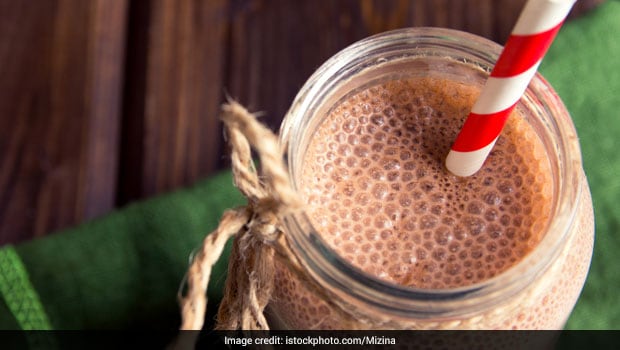
The natural sweetness of dates makes for an excellent shake that will be hard to resist. All you need to do is to toss them in the blender along with yogurt or milk and blend it to make an amazing shake. Remember to not add sugar as dates will add up to the sweetness required. This way you wouldn't be adding on to extra calories. If you want, you can add flavoured milk or flavoured yogurt too.


(Note: Don't forget to remove the seeds from the dates or khajur)
 
protein shakeThe natural sweetness of dates makes for an excellent shake that will be hard to resist​

2. Bake them


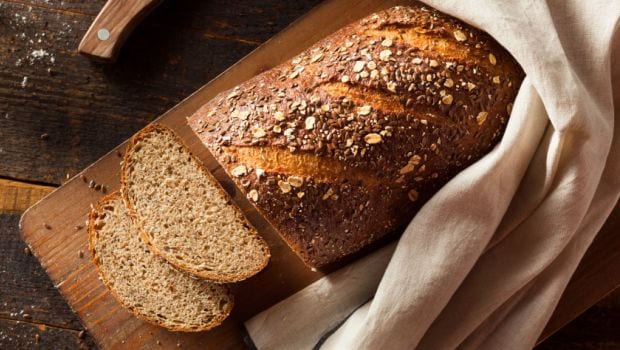
You can add its goodness in cakes, breads, cookies, pies and cupcakes too. Chop them and put them in the delights that you would bake and the enhanced flavour of these baked goods will leave you asking for more.
 
brown breadYou can add its goodness in cakes, breads, cookies, pies and cupcakes too​
 
3. Toss them in a Salad
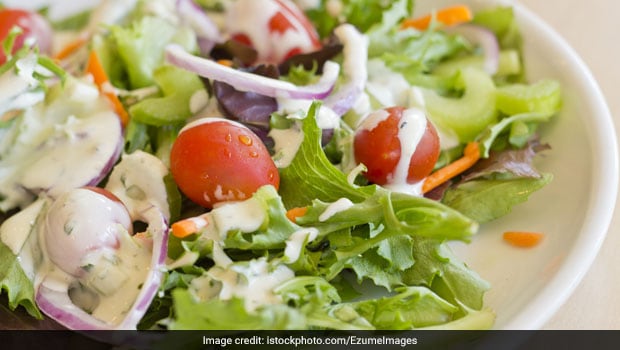
One of the best ways to add these delights in your diet is to toss them in your favourite salads only to enhance the flavour.
 
salad dressingOne of the best ways to add these delights in your diet is to toss them in your favourite salads​

 
4. Healthy Date Dessert
Not just for garnishing, you can make so many desserts with khajur that will have your guests ask for more. Some of the amazing date desserts that you can prepare at home may include Whole Wheat Date CakeDate and Prune Brownies and Date and Walnut Pie. Mouth-watering, isn't it!
 
cakeNot just for garnishing, you can make so many desserts with khajur​
 

5. Add them in Trail Mix

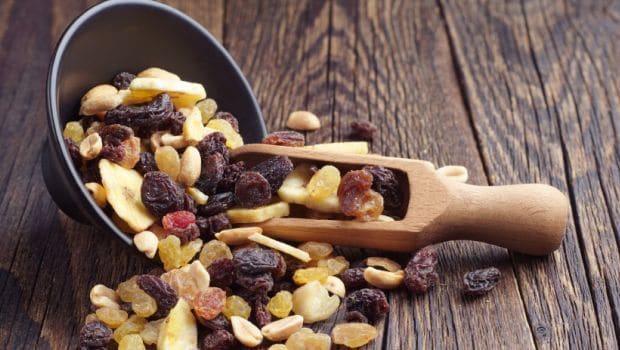
Take a handful of dry fruit assortment along with chopped dates, mix them and just savour them. That's how simple it is! You daily requirement of important nutrients with all the dry fruits and dates will be fulfilled.
 
dry fruitsMix a handful of dry fruit assortment along with chopped dates​
 
6. Use them in Cereals
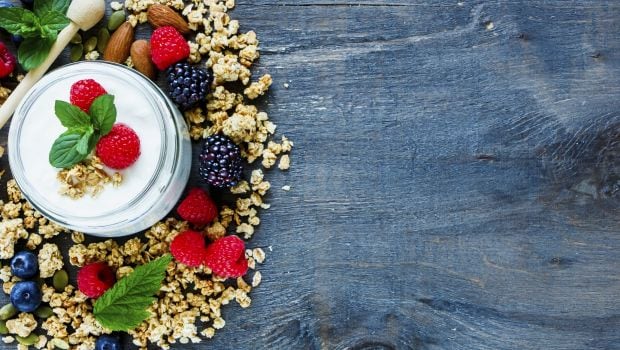
The book Healing Foods says, adding chopped dates to granola makes for a healthy breakfast option. So pick your favourite cereal for the morning breakfast and sprinkle chopped dates to make it taste even better.
 
cerealPick your favourite cereal for the morning breakfast and sprinkle chopped dates
 
Do let us know if you know of any other interesting ways to add khajur or dates in your daily diet! Stay Healthy!
 

http://food.ndtv.com/festivals/6-interesting-ways-to-include-dates-khajur-in-your-diet-1756831


Click Here For More Articles

Don't forget to opt-in to Our Healthy Living Society and get 3 free gifts while receiving the latest information on health, well-being and groundbreaking news about natural nutrition.

Should vegans date non-vegans?


Vegans have a lot of life choices to make. Who to date is just one of several dilemmas that vegans have to face. The best places for vegan fish and chips in the UK It might seem like a bizarre thing to contemplate but I’ve had various discussions with vegans and non-vegans over the years on this. My boyfriend and I had a conversation a couple of years back about if we were dating now, in this modern time of online dating, would there be one thing we would look for. I said I would actively look for a vegan, maybe a veggie at a push. He seemed shocked as he was a meat-eater then. When I explained it in terms of my beliefs and values and the adjunct that neither of us would actively date a Tory (sorry Boris) then it made more sense. Anyone can date whoever they want and I would never judge anyone for who they date. I fell in love with a meat-eater when I was a vegetarian. I’m now a vegan in love with a vegetarian. We’ve both changed over the past six years. It can happen. ‘By telling them what you believe and why they will become more informed and might actually change some of their ways’. So if you are in a relationship with a non-vegan how can you make it work? Communication is key. The other person needs to know what veganism means to you and why. By telling them what you believe and why – but absolutely not in a preachy way – they will become more informed and might actually change some of their ways or attitudes. However if they never go vegan but respect your way of life that is also OK. It’s about them being able to understand where you’re coming from. If you live together then be clear about what you are and are not OK with. Do you want any non-vegan products in the house? If not that could become a massive sticking point. I was always against meat being in the house as a veggie but now I’m vegan I’m not gonna freak out if my boyfriend has butter-laden biscuits in the cupboard (he usually does). Over time he moved to plant-based milks and most other vegan products as it doesn’t make sense to buy two of everything. Would you cook meat for a non-vegan? ‘It’s important they’re understanding’

 My stance is a big fat no-no as there is no way I want to be playing with dead animals. Understanding things such as eating out – how you might have to be the person that makes more of the decisions – or what activities you might want to do on dates is an important part of any relationship, especially if it seems like one person has more control. Make sure there are areas you can relinquish to balance out the relationship if that is the case. Finally, and for me the most important, it’s important they’re understanding. If someone doesn’t get why you’re a vegan or disses you for it then they are clearly not the one for you. How do vegans feel about dating non-vegans? Raina, 22: ‘I absolutely could never date a non-vegan. If someone supports animal cruelty and torture then they’re not the one for me.’ Gregg, 29: ‘I could 100 percent date a non-vegan. It shouldn’t be a barrier and isn’t something that I have let get in the way.’ Kelsey, 27: ‘Sure, I’d like my future man to be a vegan but if I fall for someone who I’m connected with every other way then I’ll deal with it. It’s a pretty small pool after all.’ Elly, 32: ‘I’ve tried apps like Grazer with mixed responses. I’m proud to be vegan but it doesn’t define me.’ Sam, 31: ‘I’ve mainly dated non-vegans but more recently it’s been something that I’m not as willing to compromise on.’ Should vegans date non-vegans?

http://metro.co.uk/2017/10/01/should-vegans-date-non-vegans-6961581/#mv-b
Click Here For More Articles

Don't forget to opt-in to Our Healthy Living Society and get 3 free gifts while receiving the latest information on health, well-being and groundbreaking news about natural nutrition.
Tuesday, 3 October 2017

Brits are clueless about their bodies - 39% can't distinguish between kidneys and the liver!

By Rob Knight

Millions of Brits are clueless about their bodies – with two thirds unable to tell their a**e from their elbow, a study found.


Members of the public were presented with medical definitions and asked to identify the elbow bone.

However many wrongly identified the bone as the coccyx bone or the coccygeal nerve.

It also emerged 39 per cent of respondents didn’t know the difference between the kidneys and the liver - and a quarter couldn't explain how veins and arteries differ.

One in ten men thought a period lasts for over a month, 56 per cent didn't really know why women have smear tests and a fifth had no idea what ovaries do.

And 24 per cent of UK adults didn’t know whether females have a prostate gland or not.

The research of 1,000 males and 1,000 women was commissioned by intimate health brand, Balance Activ, as part of a campaign to encourage women to understand more about how their bodies work.

Anne Dawson, Senior Marketing Manager for Balance Activ, said: “Our campaign especially aims to highlight the importance of understanding our intimate health - something many women are reluctant to discuss with their partners or a healthcare professional.”

Dr Sarah Jarvis added: “Even though, when you think about it, it should really be the one thing we know most about, this study suggests that actually we know very little about our bodies.

“This lack of awareness could also suggest that we take certain functions for granted, which could be a bit of a worry when it comes to spotting any potential health issues.

“Having a basic understanding of how our bodies work can help us keep tabs on when we may not be functioning at 100 per cent health and can help us notice any changes that may require some medical advice to help us get back on track.”

The survey, carried out by OnePoll, also found one in ten women were not sure what happens to their bodies during menopause.

And perhaps more worryingly, just over a fifth of females weren't absolutely certain why they have smear tests.

Over one third of women questioned were not completely sure what their ovaries do, and a quarter had no idea what a man’s prostate does.

Slightly more men - 27 per cent - didn’t know what a prostate does either and around a third couldn’t explain what happens during the menopause.

Only one fifth of Brits believed they are in-tune with bodies, although 95 per cent thought knowing how your body works is important in order to stay healthy.

Despite this half of those polled revealed they didn’t check their bodies regularly for abnormalities or bumps.

And around one in ten paid more attention to their physical appearance than how well their body functions.


When it comes to seeking help and advice, Brits are most likely to confide in their partner when it comes to intimate health issues - although a third of men and 29 per cent of women would rather talk to their GP.

However, 55 per cent of Brits would wait a week or two to see if their condition improved before making an appointment to see their GP or taking any other action.

The study also found 41 per cent of women either believed - or didn't know - whether Bacterial Vaginosis (BV) is a sexually transmitted infection – and six in ten didn’t know what the condition is.

While half of females had no idea what the potentially serious implications of leaving BV untreated are.

More than one in ten said they would use vaginal deodorants, washes or douches to relieve the symptoms of the condition – even though they can actually cause BV rather than treat it.

Dr Sarah Jarvis said: “BV is one of the most common vaginal conditions and is in fact twice as prevalent as thrush.

“BV occurs due to the over growth of bad bacteria in the vagina which can occur when the natural balance is disrupted by something as simple as washing with a fragranced soap.”

Anne Dawson added: “We know that intimate conditions such as BV and Thrush can often be misdiagnosed, and the key to getting the right advice is to understand your symptoms, and what the problem is.

“Having knowledge and the reassurance from people who understand BV gives you the confidence to talk, this makes all the difference when it comes to managing your health and overall well-being.

“There are clinically proven treatments out there such as Balance Activ, available online, from your pharmacist or from most major supermarkets that can quickly relieve symptoms.”

To find out more about your intimate health, visit www.balanceactiv.com – here you can access useful information, an online symptom checker and an Ask the Expert service.


Click Here For More Articles

Don't forget to opt-in to Our Healthy Living Society and get 3 free gifts while receiving the latest information on health, well-being and groundbreaking news about natural nutrition.

Sweating it out might be the key to a healthy heart!

Sweating it out might be the key to a healthy heart
Here’s a hot health tip: Taking frequent saunas can prevent heart disease, a new study claims.
Men who sweat it out at least four times a week are nearly half as likely to develop high blood pressure, according to research published in a recent issue of the American Journal of Hypertension.
University of Eastern Finland researchers examined 1,621 middle-aged men with early signs of the condition — which can lead to heart disease and stroke — over an average of 22 years, according to the report.
They found the risk of high blood pressure plunged 46 percent in guys who hit the hot box four to seven times a week and 24 percent in men who took two to three saunas a week.
Body temperature spikes up to 35 degrees during a sauna, and that jump strengthens blood vessels and removes fluid from the body — both of which decrease blood pressure, according to the research, which was first published in June.
Saunas also burn through stress by relaxing the mind and body, which may also lower blood pressure, researchers said.
Overall, researchers also found that 15.5 percent of the men developed clinically high blood pressure over the course of the study.
Heart disease is the leading cause of death in the United States.
In a separate study last year, the same team of researchers found that frequent saunas also lower risk of developing dementia.
http://nypost.com/2017/09/29/sweating-it-out-might-be-the-key-to-a-healthy-heart/

Click Here For More Articles

Don't forget to opt-in to Our Healthy Living Society and get 3 free gifts while receiving the latest information on health, well-being and groundbreaking news about natural nutrition.

It's never too late to start a healthy lifestyle!

It's never too late. People who take up a healthy diet in their middle age—and even up to the age of 75—can start seeing massive health benefits, such as weight loss and lower body fat, and all that that implies, such as reduced risk of diabetes and heart disease.


Even if you're 75 when you finally give up the burger for healthier options, such as vegetables and fruits, you'll still start seeing your health turnaround, say researchers who tracked the diets and health of around 2,000 middle-aged men and women.
Most saw a big drop in their weight, and total body fat—including fat around the liver—and this reduces the risk of metabolic syndrome, which includes a range of indicators for diabetes and heart disease in particular.
People starting a healthy diet were as young as 45 and old as 75 years, and they stuck with it for at least three years, researchers from the University of Hawaii Cancer Centre discovered.
They followed a range of different healthy diets, although the most popular were the Mediterranean diet, which emphasises fresh vegetables, fruits, nuts, fatty fish and olive oil. Most had been eating a 'fast food' or typical Western diet, which included sugar-sweetened drinks, processed food, and refined grains.
After the three years, the participants went through a series of health checks, which tested for body-mass index (BMI), body fat and liver fat.
https://wddty.com/

Click Here For More Articles

Don't forget to opt-in to Our Healthy Living Society and get 3 free gifts while receiving the latest information on health, well-being and groundbreaking news about natural nutrition.

Monday, 2 October 2017

VEGETABLES : DRINK… FAILING TO EAT!


For a long time, only the tomato and the carrot has held the privilege of being turned into liquid. Now, many vegetables share this bottling, the juice of plants comes to the environment: beets, zucchini, spinach, cucumbers… often Combining several species, these mixtures say juicing born across the Atlantic have recently crossed the ocean. The vegetable-to-drink ready-to-eat are often stamped as “Good for health” or “detox”. Several brands (Yumi, Florette) align, now on the shelves in the supermarkets, not to mention those of the retailers (Monoprix, Stores U, Leclerc), all having launched their own products. Some recipes also contain persil, celery, cabbage… and also combine fruits, in order to better reach the consumer still reluctant to eat spinach liquid ! Caution with these new entrants, which should not make us forget the “real” vegetables, preferably fresh.

THEY ARE RICH IN ANTIOXIDANTS

The main value of vegetables lies in their antioxidant activity (TAC), which is different for each plant. Analyses conducted on 23 products (juices of vegetables with or without fruit) showed that they contain significant amounts of polyphenols, including the beet juice (3.025 micrograms/ml). In addition, these antioxidant benefits are not lost during the digestion. The egyptian researchers have highlighted, in a juice consisting of tomatoes, watercress, persil, carrots, lettuce, beets and spinach, several constituents : lycopene, a pigment from the family of carotenoids, precursors of vitamin A, high dose (84,24 mg/100 g) ; vitamin C ; zinc, a trace mineral essential for the metabolism of proteins ; but of the manganese, which is involved in cartilage formation as well as in the synthesis of cholesterol and scarring.

A GOOD SOURCE OF POTASSIUM

The vegetable juice also contain potassium (92,42 mg/100 g), which is essential to the acid-base balance of the body and for the proper functioning of nerves and muscles. “The intake of potassium is interesting, since we tend to not eat enough, as opposed to salt. However, an imbalance in sodium/potassium can tire the body and help to increase the blood pressure,” says Dr. Laurent Chevallier, nutritionist at the CHU of Montpellier.

A NUDGE TO EAT MORE VEGETABLES…

In France, only one-third of the population consumes five servings of fruits and vegetables per day, while the new benchmarks for nutrition Program national nutrition health (PNNS) set by the national Agency of sanitary security of food (Anses) now advocate for eight servings. According to an american study, one or two cups (a cup is 250 ml) of juice a day would help to fill this gap. Playful, their consumption may also appeal to more young people.

… BUT WITHOUT THE REPLACE

125 ml of vegetable juice correspond, quantitatively, a serving of vegetables. However, the drink does not have the same effects as eating intact plant from which the juice. Because it contains almost more of fibres which are broken during the manufacturing process. While the vegetables are 2 to 4 g per 100 g, some juice does not display more than 0.5 to 0.9 g. Gold-various studies have shown that our contributions are still insufficient (less than 20 g per day when the Anses recommends 30 g). A deficiency is unfortunate, because the beneficial effects of fiber are well-known: these carbohydrates assimilated accelerate in effect on the intestinal transit, reduce blood sugar and provide a faster feeling of fullness. Not to mention the reduction in the risk of cardiovascular disease, type 2 diabetes, cancers of the colon, rectum and breast.

ATTENTION TO THE LEVELS OF SUGARS AND SALT

In some recipes, especially those with carrots or beets, one finds 5 to 8 g of carbohydrate per 100 ml or one to two pieces of sugar! Caution also with some products involving vegetables and fruit, because they may be a step in the climbing sweet. In addition, the vegetable juice can include additions of salt, as observed by the report of Oqali made in 2009. And the famous cocktail of vegetable juice Original V8 of the brand Campbell’s displays 650 mg of sodium, 1.62 g of salt, 340 ml ! Recall that the maximum amount daily recommended by the world Health Organization (WHO) is 5 g or less of a teaspoon.

JUICE EXTRACTOR OR CENTRIFUGE?

Focus the juice, “home-made” remains a good compromise. However, the retention must not exceed 24 hours, the risk of oxidation and fermentation. As to whether it is better to invest in a juicer or a juice extractor – two times more expensive -it is still difficult to decide on.
According to the magazine que choisir, the extractor loses the fiber. Thanks to a pressing slow, it would preserve, however, the better the integrity of the vitamins and nutrients, instead of the centrifuge which, by producing heat, which would destroy in part. The extractor would also have 100 % of vitamin C, where the centrifuge reveals 79 %. Their performance, however, are identical for the vitamin K (30 %) and B9 (50 %). The only point on which the centrifuge prevails : it renders 57 % of beta-carotene compared to 28% for the extractor.
By Sylvie Boistard

Sunday, 1 October 2017

The Citrus Family Tree

Citrus, in many ways, stands alone. So many cultivated species have come from so few primary ancestors. Just three, in fact: citrons, pomelos, and mandarins, all native to South and East Asia before they started their journeys west, to places like Florida, California, and Brazil that built entire economies around fruits from the other side of the world.

Such simple lineage is the result of impressive commonality. Almost all citrus has the rare genetic combination of being sexually compatible and highly prone to mutation. Such traits allow their genes to mix, for thousands of years on their own, and eventually, at the hands of humans. The product of so much natural crossing in the wild and selective breeding at research farms and in fields is every orange, lemon, lime, and grapefruit you’ve ever eaten.

No other fruit genus can boast such pedigree, and new research is bringing clarity to the origin of citrus. Grapefruits are a human discovery, less than 300 years old. But citrus itself is ancient. Fossilized leaves discovered in China’s Yunnan Province in 2009 and 2011 suggest citrus has existed since the late Miocene epoch, as many as seven million years ago. Humans, however, have brought a great winnowing: Out of thousands of wild types, only a few dozen have become commercial behemoths like the navel orange, Eureka lemon, and Mexican lime. They’re the citrus one percent.
The scientists who study citrus love it for its appeal, its mystery, and its drama. “There’s something fascinating, freaky, even sexy about citrus,” says pomologist David Karp, whose research informs the above illustration. A bacterial disease called huanglongbing (a.k.a. citrus greening) that causes plants to defoliate, decay, and eventually die, is threatening commercial production on every arable continent, including North America, where the disease arrived in 2005. Yet a fruit group of such illustrious history won't be exterminated so easily. The future is likely to bring more types of citrus, not fewer. “Citrus is competitive,” says citrus breeder and geneticist Fred Gmitter, explaining how global researchers race to develop, say, mandarin oranges that are sweeter, seedless, and easier to peel. “In the near future, you’ll see a lot of outside-the-box new stuff.” And, an ever-expanding family tree.

Click Here For More Articles

Don't forget to opt-in to Our Healthy Living Society and get 3 free gifts while receiving the latest information on health, well-being and groundbreaking news about natural nutrition.

Cut Lemons And Keep Them In Your Bedroom… This Will Save Your Life!

We all know that lemons are loaded with a number of nutrients and vitamins. The fresh aroma of lemons is refreshing and good for health. Lemons also possess antiseptic and antibacterial properties. Many people are not aware of the various health benefits of lemons. So, let’s check out how this fabulous fruit can do wonders to our health.
Lemon aroma is clean and refreshing.
It not only brings positivity but also helps in combating anxiety and depression.
There are many restaurants with lemon trees that help in relaxing the guests.
You can also spread lemon aroma in your house to stay fresh every time.
Experts suggest that lemons can clean the scalp thoroughly.
Lemons provide treatment for several skin problems including dark spots, scars, and acne.
Cut a lemon in half and rub on the affected areas of your body.
You can also use lemons for cleaning the stubborn body parts such as elbows, knees, and calluses.
Lemons can also be used for nail whitening, breath freshening, and treating sore feet.
You can get rid of several diseases with this amazing fruit.
Lemons can easily cure numerous diseases such as arthritis, indigestion, and rheumatism.
Consume lemonade every day to get rid of stones naturally.
Lemons can also prevent other severe diseases such as cholera and malaria.
It is because lemons are natural blood cleanser and purifier.
Daily consumption of lemons reduce signs of aging.
Lemons are packed with several nutrients such as vitamin C, vitamin A, vitamin E, copper, chromium, potassium, iron, and magnesium.
Use lemon juice as a natural air freshener to kill bacteria of all types.
Just cut a few lemons and leave them in your bedroom overnight.
The lemon aroma will improve the functioning of your lungs and prevent breathing problems.
If you have asthma, colds, and allergies, then inhaling lemon aroma can clean your throat and air passages naturally.
Share this information with everyone you care for.
Loved this? Spread it out then
https://jerseydemic.com/cut-lemons-and-keep-them-in-your-bedroom-this-will-save-your-life/

Click Here For More Articles

Don't forget to opt-in to Our Healthy Living Society and get 3 free gifts while receiving the latest information on health, well-being and groundbreaking news about natural nutrition.

Synthetic vitamins vs Food based vitamins - video


Dr. Axe - Synthetic vitamins vs Food-based vitamins

Natural Vitamin D Supplements

Since most of us are vitamin D deficient, it is in our best interest to find a natural vitamin D supplement.
As I've said before, the best sources of vitamin D come directly from the sun.
But supplements are almost always necessary to get our vitamin D levels up high enough to reap the many health benefits. Why?

  • Most of us spend too little time outdoors without sunscreen
  • Most of us are in a geographic location where we can only make vitamin D during the summer months
The good news is that these supplements are becoming more readily available. But only one kind is considered natural.

There are two different types of vitamin D available in supplement form – vitamin D2 (also known as ergocalciferol) and vitamin D3 (also known as cholecalciferol).
Vitamin D2 is the type you'll find in most multivitamins, prescriptions, most supplements, and vitamin D fortified foods. It is a patented drug that behaves like vitamin D, but it is not natural. It has been responsible for the vast majority of toxicity reports on vitamin D and should be avoided.
Along with the increased risk of toxicity, it has been found to be less than half as effective as natural vitamin D3. It is also suspected of blocking some vitamin D health benefits.
Vitamin D3 is the naturally occurring form of vitamin D in your body and the one you should choose when supplementing.

The best kind is to buy is dry or in coconut oil. This is because most vitamin D supplements contain oils as stabilizers that are either unhealthy and/or have gone rancid.
You'll also want to make sure that your supplement provides a high enough vitamin D dosage to be effective. For most of us, that will be pills that are in 5,000 IU increments.

Click Here For More Articles

Don't forget to opt-in to Our Healthy Living Society and get 3 free gifts while receiving the latest information on health, well-being and groundbreaking news about natural nutrition.