Showing posts with label Kale. Show all posts

Friday, 8 May 2015

Six Leafy Greens That Are Healthier Than Kale

by Nick Meyer

Nowadays kale is so popular that there are people walking around with t-shirts bearing its name, resembling that of a famous Ivy League college (that would be Yale in case you’re wondering).

The dark leafy green that no one wanted is now showing up in everything from smoothies to salad recipes to kale chips.

In just a few short years, it’s gone from an afterthought to one of the biggest symbols of the organic food movement, and there’s no denying it’s spot as one of the healthiest overall foods out there.

But if you’re like me you probably gotten, well, a little bit tired of it. Just because it’s cheap and ridiculously healthy doesn’t mean we need to eat it every day, especially when there are so many more interesting things to throw in our salads.

And contrary to popular belief, kale isn’t the be-all, end-all of leafy greens when it comes to being the healthiest — there are actually plenty of similar greens (with more flavor in my humble opinion) to try that are more nutritionally dense, and sometimes by a big margin.

SwissChard
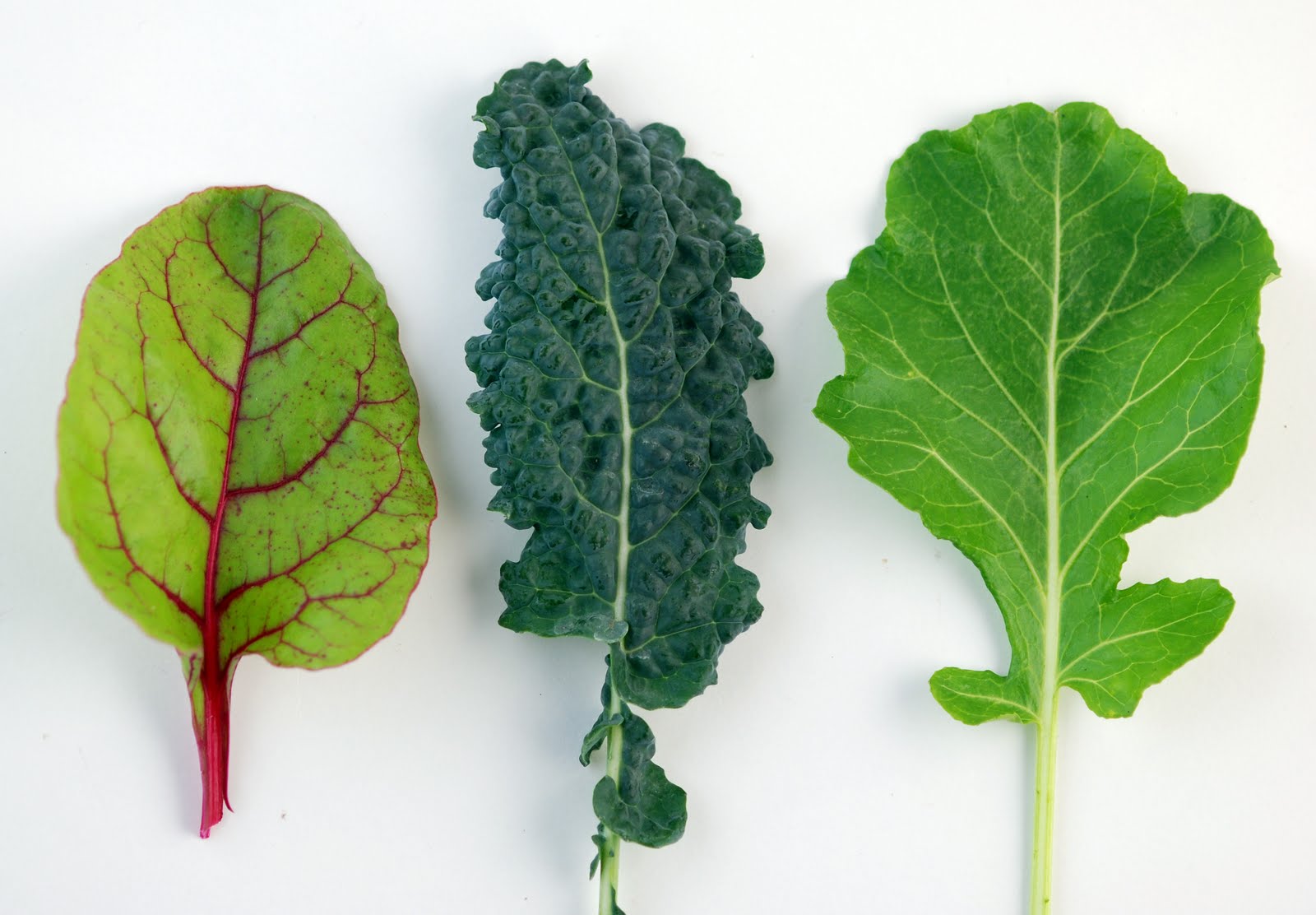
Rainbow chard, shown here, is more nutritionally dense than kale according to one recent study.(Image Credit)

Six Foods That Have More Nutrients Per Ounce than Kale

Kale is still a wonderful value at as little as $1.99 for a bunch even in the organic section. But can you really call it the #1 superfood among greens?
Not according to the 2014 CDC study ‘Defining Powerhouse Fruits and Vegetables: A Nutrient Density Approach.’
It ranked produce on a scale of 1-100 to find out which foods were the most nutritious.Kale checked in at a  respectable nutrient density score of 49.07.
But the following greens have it beat:
1. Chicory- Resembling the dandelion green, this unheralded veggie can be added to salads. It checked in with a nutrient density score of 73.36. It has a nice profile ofVitamins A, C, and E among others.
2. Spinach- Long thought to have less nutrients than kale, spinach actually scored far better with a total of 86.43.
It’s a great source of Vitamin K, Vitamin A (in the form of carotenoids), manganese, folateand more.
3. Beet Green- Think you should throw these away? Think again!
They scored a whopping 87.27 in the study. Add these to your diet for added Vitamin A, K and lutein/zeaxanthin (for vision health).
11607767895_dbd8ad605d_hDon’t forget to eat the greens on top of the beet as well. (Image Credit)

4. Chard- Also known as Swiss chard, this cousin of collard greens came in at 89.27. It’s a great change-of-pace to kale and a wonderful source of Vitamins A, K, and the important mineral magnesium.
5. Chinese Cabbage- Most people know this veggie as bok choy but few actually buy it. That’s a big mistake!
Bok choy scored a 91.99 on the nutrient density scale and is rich in silica for great hair, skin and nails as well as Vitamins A, B and K.
6. Watercress- A great source of magnesium, folate, pantothenic acid and many different vitamins and minerals, watercress comes in at #1 with a perfect score of 100.
It’s so easy to pass up in the grocery store and so hard to find that we don’t see it passing kale in terms of its reputation for being a top health food any time soon.
But that doesn’t mean you shouldn’t pass up a chance to add it to your shopping cart if you get the chance…your body will thank you!

Tuesday, 10 February 2015

The Healthiest Superfoods This Year 2015


Chaga Mushroom

By Food World News Staff Reporter

Year 2015 opens a lot of possibilities not just opportunities but even a lot better life than last year. Well, in terms of healthier lifestyle 2015 is also the best year for you to start planning a better new you. If last year Kale and Chia seeds are the super foods, this year you will discover the greatness of Moringa, Chaga Mushroom, and Chlorella.


Super food #1 Moringa:

This is the plant native in South America and Asia that is well known because of its many uses. This certain plant is very high in calcium, magnesium, iron, zinc, and potassium. Aside from those mentioned here, Moringa is also a great source of Vitamin C and essential amino acids.
Moringa is best for digestion, liver protection, and blood sugar regulation. You can use 1 tbsp. of Moringa seeds per day to your smoothie, food, or even tea.

Super food #2 Chaga Mushroom:

In a place like Siberia, Chaga Mushroom grows on the birch of the trees. What make this mushroom considered as super food are its antioxidant content and its capability to strengthen the person's immune system. Chaga can also ward off bacteria and viruses.

You can have this by steeping the mushroom into the hot water for about 30 minutes. However, this can stain your teeth. So, there are people who go for its alternative by having chaga mushroom powder, tea, liquid drops, or the pill form of chaga mushroom.

Super food #3  Chlorella:

 What is Chlorella and how could it possibly help us? Well, this is like a single cell algae of color green and can be found in freshwater. It contains 65% protein and packed with vitamins. It has more chlorophyll compared to any other leaf food or vegetables. In fact, algae are 40% greater chlorophyll than wheatgrass has. This is great detoxification most especially in liver.
http://www.foodworldnews.com/articles/14477/20150209/healthiest-superfoods-year-2015.htm

Friday, 6 February 2015

10 Superfoods Healthier Than Kale


In the world of marketing, image is everything. If you're James Franco or Roger Federer or Taylor Swift, your name and face can be used to sell anything from phones to watches to perfume -- even if you're not necessarily famous for the your tech-savvy, your promptness, or the way you smell.
In the food world, the biggest celebrity of all might be kale -- the Shakira of salads, the Lady Gaga of leafy greens. It's universally recognized that kale anything--kale chips, kale pesto, kale face cream -- instantly imparts a health halo. Even 7-Eleven is making over its image by offering kale cold-pressed juices. And yes, kale has plenty of benefits -- including high levels of folate and more calcium, gram for gram, than a cup of milk.
Still, kale's actually not the healthiest green on the block. In fact, in a recent report published by the Centers for Disease Control that ranked 47 "powerhouse fruits and vegetables," kale placed only 15th (with 49.07 points out of 100 for nutrient density)! Here's a roundup of the 10 leafy green cousins that researchers say pack a greater nutritional wallop. Read 'em, eat 'em, and reap the benefits.
2014-11-24-Kale.jpg
SUPERFOOD #10 Collard Greens
Nutrition Score: 62.49
A staple vegetable of Southern U.S. cuisine, collard greens also boast incredible cholesterol-lowering benefits -- especially when steamed. A recent in vitro study published in the journal Nutrition Research compared the effectiveness of the prescription drug Cholestyramine to steamed collards. Incredibly, the collards improved the body's cholesterol-blocking process by 13 percent more than the drug! Of course, that won't do you any good if you insist on serving them with ham hocks.
SUPERFOOD #9 Romaine Lettuce
Nutrition Score: 63.48
Even more so than its cousin kale, the humble Romaine lettuce packs high levels of folic acid, a water-soluble form of Vitamin B that's proven to boost male fertility. A study published in the journal Fertility and Sterility found supplemental folic acid to significantly increase sperm counts. Get the man in your life to start craving Caesar salads, and you may soon have a baby Julius on board. (Ladies, this green packs health benefits for you, too! Folate also plays a role in battling depression, so change out your kale for Romaine and, while you're at it, stock up on these other 8 Foods That Boost Your Mood.)
SUPERFOOD #8 Parsley
Nutrition Score: 65.59
Yes, that leafy garnish that sits on the side of your plate -- the one they throw away after you eat the rest of your meal -- is a quiet superfood, so packed with nutrients that even that one sprig can go a long way toward meeting your daily requirement for vitamin K. Moreover, research suggests the summer-y aroma and flavor of chopped parsley may help control your appetite. A study in the journal Flavour found participants ate significantly less of a dish that smelled strongly of spice than a mildly scented version of the same food. Adding herbs, like parsley, creates the sensory illusion that you're indulging in something rich -- without adding any fat or calories to your plate.
SUPERFOOD #7 Leaf Lettuce
Nutrition Score: 70.73
The nutritional Clark Kent of the salad bar, this common and unsuspecting leafy green is ready to take its place among the superfoods. Two generous cups of lettuce provides 100 percent of your daily vitamin K requirement for strong, healthy bones. A report from the Nurses' Health Study suggests that women who eat a serving of lettuce every day cut the risk of hip fracture by 30 percent than when compared with eating just one serving a week. (What other foods might you be underestimating? Find out which are in your kitchen now in our 6 Surprising Superfoods.)
SUPERFOOD #6 Chicory
Nutrition Score: 73.36
Chicory is a family of bitter greens, but its most well-known member is radicchio, the small red or purple leaf that comes in a head about the size of a softball. It's one of the best dietary sources of polyphenols -- powerful micronutrients that serve a role in preventing disease. A study in the Journal of Nutrition found that people who consume 650 mg a day of polyphenols have a 30 percent chance at living longer than those who consume less than that. A cup of chicory leaves clocks in at about 235 mg (double that of spinach!), so consider adding a little leafy red into your leafy greens.
SUPERFOOD #5 Spinach
Nutrition Score: 86.43
Spinach is to kale what Michael Jordan is to LeBron James -- the once unrivaled king now overshadowed by the hot new thing. But like MJ, spinach has a few more championship rings than its more current rival -- primarily its position as a top source of biceps-building iron. According to the United States Department of Agriculture, a 180 gram serving of boiled spinach provides 6.43 mg of the muscle mineral -- that's more than a 6-ounce hamburger patty! Recent research also suggest compounds in the leaf membranes called thylakoids may serve as a powerful appetite suppressant. A recently published long-term study at Lund University in Sweden found that having a drink containing thylakoids before breakfast could significantly reduce cravings and promote weight loss. On average, the women who took the spinach extract lost 5.5 pounds more than the placebo group over the course of three months. (It's easy to see why spinach tops our list of the essential 8 Foods You Should Eat Every Day.)
SUPERFOOD #4 Beet Greens
Nutrition Score: 87.08
Yes, the stuff they cut off and throw in the garbage before charging you an arm and a leg for "beet salad." A scant cup of the bitter green serves up nearly 5 grams of fiber--that's more than you'll find in a bowl of Quaker oats! Researchers at the University of Leeds found that risk of cardiovascular disease was significantly lower for every 7 grams of fiber consumed. Try them in stir frys and eat to your heart's content!
SUPERFOOD #3 Chard
Nutrition Score: 89.27
Chard. Sounds like "burnt." It's not as fun a name to drop as, say, "broccolini," but it might be your best defense against diabetes. Recent research has shown that these powerhouse leaves contain at least 13 different polyphenol antioxidants, including anthocyanins-anti-inflammatory compounds that could offer protection from type 2 diabetes. Researchers from the University of East Anglia analyzed questionnaires and blood samples of about 2,000 people and found that those with the highest dietary intakes of anthocyanins had lower insulin resistance and better blood glucose regulation.
Related: 5 Daily Habits That Blast Belly Fat
SUPERFOOD #2 Chinese Cabbage
Nutrition Score: 91.99
Taking the silver medal in the powerfood Olympics is Chinese cabbage, also called Napa or celery cabbage. Rich sources of highly available calcium and iron, cruciferous vegetables like the cabbage have the powerful ability to "turn off" inflammation markers thought to promote heart disease. In a study of more than 1,000 Chinese women, published in the Journal of the Academy of Nutrition and Dietetics, those who ate the most cruciferous vegetables (about 1.5 cups per day) had 13 percent less inflammation than those who ate the fewest.
SUPERFOOD #1 Watercress
Nutrition Score: 100
The top dog, the unrivaled champion, the chairman of the cutting board, watercress may also be the closest thing yet to a true anti-aging food. Gram for gram this mild-tasting and flowery-looking green contains four times more beta carotene than an apple, and a whopping 238 percent of your daily recommended dose of vitamin K per 100 grams -- two compounds that keep skin dewy and youthful. The beauty food is also the richest dietary source of PEITC (phenylethyl isothiocyanate), which research suggests can fight cancer. Results from an eight-week trial published in the American Journal of Clinical Nutrition suggest daily supplementation of 85 grams of raw watercress (that's about two cups) could reduce DMA damage linked to cancer by 17 percent. Exposure to heat may inactivate PEITC, so it's best to enjoy watercress raw in salads, cold-pressed juices, and sandwiches.
SAVE $$$ AND CALORIES NOW! For the latest food swaps and weight-loss tips, sign up for our free newsletter full of diet tricks, menu hacks, and easy ways to a healthier, happier you.

http://www.huffingtonpost.com/david-zinczenko/10-superfoods-healthier-t_b_6213842.html

Friday, 5 December 2014

Top 10 Ways to Prepare Kale


My body has been deprived of leafy greens this summer. It has been so hot here in Nashville, that no greens stood a chance to grow in the blazing heat. Last week, I saw a familiar friend at the Market – KALE! I couldn’t believe it. For me this marked the end of the summer, and the promise of cooler temperatures to come.

So I over zealously bought 5 bunches, which set me back about $15. I didn’t care, I had kale.

Once I got home I realized that I couldn’t really fit all 5 bunches in my refrigerator, so I needed to deal with it in the next day or so. So I decided to make up a big batch of kale pesto that I could freeze. (Recipe)

After receiving lots of messages via twitter about what else people could do with kale, I figured I’d better help ya’ll out and offer a few ways to prepare it. It’s no secret that kale is one of nature’s super foods, and getting it into your diet is worth the effort.

10 Great Ways to Eat Kale...

Kale Chips – This simple preparation of kale will have you begging for more. A crispy salty treat that is better than popcorn or potato chips.

Kale Pesto – More flavorful than basil pesto, this is a great addition to pizza, pasta, or in an omelet.

Sauteed Kale – For a hearty side dish, this is a classic preparation. I saute onions and garlic before I add the kale, and add a couple dashes of hot sauce for an added kick.

Kale Quiche – You can substitute any spinach quiche with kale and it offers the same great taste with the added health benefits.

Kale Soup – A classic kale soup is made with white beans and ham or sausage, however I like this recipe of using acorn squash and kale to create a sweet and savory winter favorite.

Kale Lasagna – The perfect “make ahead” recipe for a hearty dinner is a dish the whole family can enjoy.

Kale Juice – If you own a juicer, kale is quite possibly the healthiest thing to juice. Mix it with apples, carrot and a little lemon for a drink that is better for you than liquid gold.

Kale Slaw – You can substitute raw kale for raw cabbage in this recipe.

Kale Pasta – One of my favorite ingredients to add to pasta. Goes with just about anything from spaghetti to sausage pasta to baked macaroni and cheese.

Kale Pizza – One of the joys I’ve found with eating seasonally is changing up my grilled pizza toppings. One of my favorite combinations is sauteed kale, caramelized onions, strong white cheeses, and some crispy bacon.
Overall, kale is a delicious and hearty green. Treat it like spinach and you can substitute it in just about any recipe. Experiment and enjoy!

Tuesday, 1 July 2014

10 Healthy Snacks To Always Have On Hand

BY MARGARET WERTHEIM


Smoothie with Fruit, Hemp Seeds, and Chia Seeds
I love adding hemp seeds to smoothies, because they're fiber rich and packed with nutrients like magnesium, iron, zinc, and B-vitamins. Chia seeds are very rich in soluble fiber, meaning they absorb water and can thus help promote good digestion and elimination. Berries are always a great choice for smoothies, but experiment with adding avocados, apples, oranges, spinach, and other fruits or veggies.
Plain Yogurt with Berries, Nuts or Seeds
Flavored yogurts often contain more than 20 grams of added sugar. If adding fruit doesn't make plain yogurt sweet enough for you, add a small amount of honey, maple syrup or molasses.
Hummus or Bean Dip with Vegetables
Keep hummus or bean dip on hand for dipping vegetables like carrots, celery, cherry tomatoes, and cucumbers.
Kale Chips
This delicious nutrient-rich snack is about as good as it gets. Coat chips with nutritional yeast or your favorite spices before baking for a savory and crunchy snack.

Apple with Almond Butter
A very yummy and satisfying snack rich in vitamin E from the almond butter and the phytonutrient quercetin in the apple.
Dark Chocolate with 90% Cocoa
I know there are many people who crave chocolate. Choose chocolate with the highest cocoa content you can handle, and keep striving for higher cocoa content. Remember that certain things are an acquired taste. Generally, the higher the cocoa content, the lower the sugar content. There are only about 3 grams of added sugar in 1.5 ounces of 90% cocoa dark chocolate!
Guacamole with Vegetables
Pass on the pita chips or tortilla chips and boost your intake of vitamins, minerals and antioxidants by using vegetables, veggie chips, or flax crackers instead.
Hard-Boiled Eggs
This nutrient-rich food gets an undeserved bad rap. Eat hard-boiled eggs plain, or put one in a corn tortilla with some spinach and guacamole for a very satisfying snack. Because hard-boiled eggs can be great for an on-the-go morning, boil or bake some up ahead of time to quickly grab.
Banana Ice Cream
For those really stubborn sugar cravings, try "ice cream" sweetened only with bananas. Try plain, strawberry orchocolate peanut butter
.

Sweet Potato Chips
Thinly slice sweet potatoes and coat with a small amount of coconut oil and bake until crisp. They're an absolutely delicious snack packed with vitamin A, potassium, and vitamin C.

Friday, 20 June 2014

The Dark Side Of Kale (And How To Eat Around It)

The Dark Side Of Kale (And How To Eat Around It)

The headline in The New York Times made my heart sink: “Kale? Juicing? Trouble Ahead.
Confession: I’m one of those Vitamix-loving, green-smoothie worshipping, kale bandwagoners. I brim with holier-than-thou pride when my kids eat raw kale (no dressing, even!) and thick kale-laden shakes while other children snack on sugary GoGURT squeezes and suck on juice boxes.
I am not alone. Presidents and stars are kale-lovers too.
Kale, in case you haven’t noticed, is health-conscious America’s “it” vegetable. Raw, blended, sauteed or in chip or “crunch” form, it appears to be the manna of celebrities: Gwyneth and Jennifer devour it while Kevin Bacon recently declared [it's] “the age of kale.” In an astutely reported feature called “Stars Who Love Kale,” US Weekly quotes Bette Midler saying: “Kale is burning up the veggisphere.”
Even the Obamas dined on kale salad at their Thanksgiving feast, notes The Washington Post.
But apparently there’s trouble in cruciferous paradise.
Writing for The Times, Jennifer Berman reports on the dark side of kale, and how the health-infused, veggie Eden she’d carefully built over years began to crumble:
Imagine my shock, then, at my last physical, when my doctor told me I had hypothyroidism, common in women over 40. When I got home I looked up the condition on the Internet and found a list of foods to avoid. Kale, which I juiced every morning, tops the list, followed by broccoli, cauliflower, cabbage, Brussels sprouts and collard greens — the cruciferous vegetables I consumed in large quantities because they are thought to prevent cancer, which runs in my family. And flax — as in the seeds — high in omega 3’s, that I sprinkled on cereal and blended in strawberry almond milk smoothies. Also forbidden: almonds and strawberries, not to mention soy, peaches, peanuts, corn, radishes, rutabaga and spinach.
My first reaction: Berman must be misguided, mistaken. Can kale possibly be bad?
Well, yes, possibly. Here’s the science-y lowdown on the kale-thyroid connection from the Oregon State University Micronutrient Information site:
Very high intakes of cruciferous vegetables…have been found to cause hypothyroidism (insufficient thyroid hormone) in animals (68). There has been one case report of an 88-year-old woman developing severe hypothyroidism and coma following consumption of an estimated 1.0 to 1.5 kg/day of raw bok choy for several months. Two mechanisms have been identified to explain this effect. The hydrolysis of some glucosinolates found in cruciferous vegetables (e.g., progoitrin) may yield a compound known as goitrin, which has been found to interfere with thyroid hormone synthesis. The hydrolysis of another class of glucosinolates, known as indole glucosinolates, results in the release of thiocyanate ions, which can compete with iodine for uptake by the thyroid gland. Increased exposure to thiocyanate ions from cruciferous vegetable consumption or, more commonly, from cigarette smoking, does not appear to increase the risk of hypothyroidism unless accompanied by iodine deficiency. One study in humans found that the consumption of 150 g/day (5 oz/day) of cooked Brussels sprouts for four weeks had no adverse effects on thyroid function.
(For an updated reality check on kale consumption and the thyroid, see our Q and A with endocrinologist and thyroid expert Dr. Jeffrey Garber here. Bottom line: in the U.S, where we don’t have a big problem with iodine deficiency, it’s probably OK.)
Teresa Fung, Sc.D., M.S.. an adjunct professor of nutrition at the Harvard School of Public Health and a professor at Simmons College in Boston, confirms the kale-thyroid link. But, she says, “normal, reasonable amounts of eating should not be a problem. A regular person [with no thyroid issues] who eats several servings of cruciferous vegetables a week should not have problems.”
Fung adds: “It’s the dose that makes a poison. If people have hypothyroidism or they’re taking thyroid medication, then they should check with their doctor. But even in this case, reasonable amounts shouldn’t be a problem. Now, if people have a tall glass of kale juice every single day, then it gets into the unknown territory.”
So, what are still-anxious kale-lovers to do? I asked Somerville, Mass. health coach and psychology of eating coach Nina Manolson to offer some guidance. (She’s not a doctor, but she knows a lot about food, so keep that in mind and always check with a professional if you make major changes in your diet.)
Nina reiterated that kale is a goitrogenic food, meaning that it can contribute to an enlarged thyroid — a goiter. A goiter indicates that the thyroid gland is not functioning optimally. But, she says, there are ways to have our kale and eat it too. Here, lightly edited, are her suggestions:
1. Cook Your Kale
The goitrogenic properties of kale become dramatically lessened when kale — or any other cruciferous vegetable — is cooked. (Other veggies in this category include: broccoli, brussel sprouts, cabbage, cauliflower, collard greens, kohlrabi, mustard, rutabaga, turnips, bok choy and Chinese cabbage. Arugula, horseradish, radish, wasabi and watercress are also cruciferous vegetables.)
2. Eat Seaweed
Kale on its own does not increase the risk of thyroid problems. It’s a combination of factors; including potential iodine deficiency. (One of the most common causes of goiters is iodine deficiency.) Adding seaweed or another iodine rich food to your diet may, in some cases, help you get adequate iodine.
3. Throw A Brazil Nut Into Your Smoothie
Selenium can support normal iodine levels which in turn may support a healthy thyroid. A Brazil nut or two in your daily smoothie or as a topping to any dish might help keep selenium levels strong.
4. Switch Up Your Greens
Vary your greens. If you’re going to eat kale one day choose a non-cruciferous, non-goitrogenic veggie dish the next, like a simple cucumber and tomato salad, or beets. There are many highly nutritious vegetables that aren’t goitrogenic, including celery, parsley, zucchini, carrots and more. Our bodies need many nutrients and by eating a variety of vegetables you’ll ensure that you don’t overload on one and skip another.
Nina adds:
If you don’t have a thyroid issue, kale can and should be a delicious and healthy part of your diet because it is, indeed, a nutritional superstar with excellent credentials:
•It supports strong bones because of its high calcium content.
•It’s a potential immune booster, rich in Vitamin C.
•It may protect us against cancer because it’s packed with antioxidants and as mentioned, it’s a cruciferous vegetable.
•It’s high in iron which can support blood and energy levels.
•And of course, it’s packed with fiber so it’s great for digestion.
All of this leaves me wishing that eating were just, well, simpler. With no arsenic in the rice and no flip-flopping guidance on milksoy, whatever, from the experts.